Man RayEstados Unidos, 1890–1976
Return to Reason
¿Se puede contemplar?
Por ahora no recibe

Instituto de Artes de Mineápolis
Minneapolis, Estados Unidos
Pertenece a la colección, pero ahora mismo no está expuesta.
- Comprobado
- hace 5 horas
- En este estado desde
- 25 sept 2026
- Fuente
- Los datos de colección del propio museo
About the painting
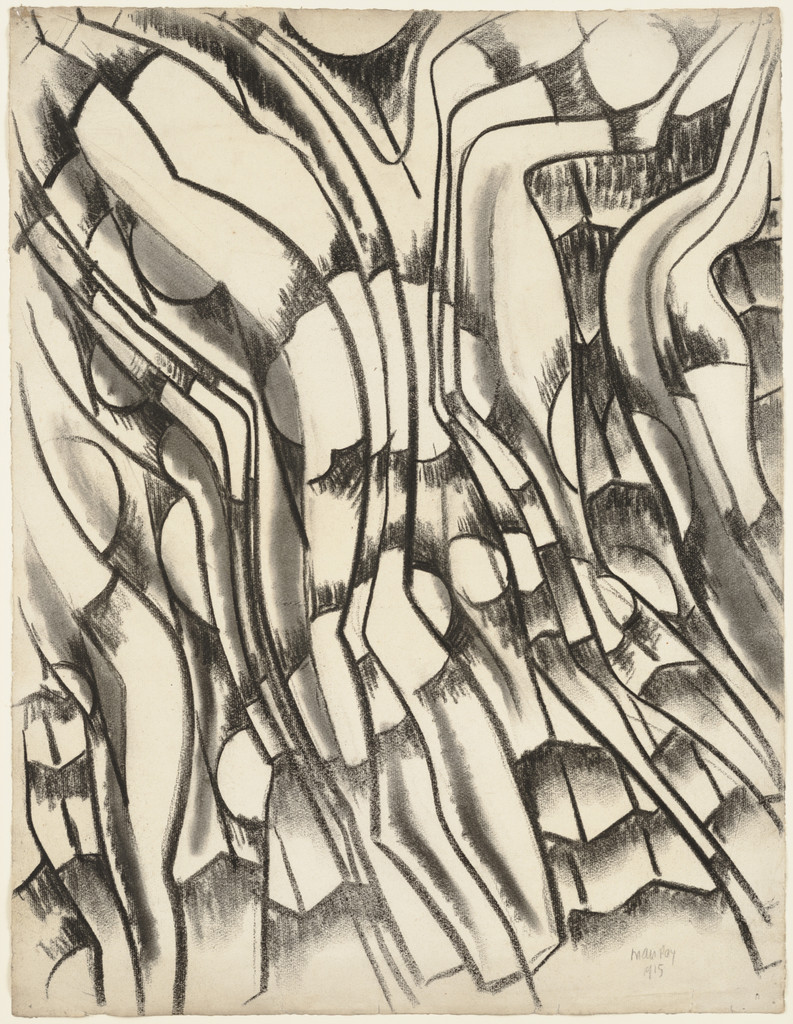
Man Ray was a leading figure in the Dada movement (both in New York and Paris) and later in Surrealism, exploring the concept of the “found object”—discarded materials treated as valued artifacts. Many of these objects recur in Ray’s work over a period of time. The motif of the unwinding swath of paper, for instance, first appeared in Man Ray's controversial Dada sculpture Lampshade, made in 1919, in which an unrolled paper lampshade curls around a metal shaft. He returned to the idea in four subsequent works, three of which are titled Return to Reason. This painting is the earliest. A three-minute film followed in 1923 and a larger version of this painting in 1939.
Instituto de Artes de Mineápolis
Ficha
- Número de inventario
- 96.21
En el catálogo
Fuentes
- Instituto de Artes de Mineápolis: the museum's own open data · obtenido hace 4 días
- Imagen: Instituto de Artes de Mineápolis — © Man Ray Trust / Artists Rights Society (ARS), NY / ADAGP, Paris
Mientras tanto, en la vida de Man Ray
La vida entera1920
Founding the Société Anonyme
Man Ray, Katherine Dreier and Marcel Duchamp found the Société Anonyme, an itinerant collection that becomes the first museum of modern art in the United States; in 1941 its collection is donated to the Yale University Art Gallery.
1920s
A photography studio: portraits of Paris bohemia
Convinced that he cannot make a living from his art alone, Ray buys a camera and opens a studio; he creates a series of famous photographic portraits of Erik Satie, James Joyce, Gertrude Stein and Jean Cocteau.
1921
His first Paris exhibition at the Galerie Six
Ray's first solo exhibition in Paris is held at the Galerie Six, organised by Philippe Soupault; for it he creates his first Dadaist work in France, The Gift (Le Cadeau).
c. 1921
Rayographs: photograms without a camera
His accidental rediscovery of the cameraless photogram, which he calls 'rayographs', produces images hailed by Tristan Tzara as 'pure Dada creations'.
c. 1921
Meeting Kiki de Montparnasse
Shortly after arriving in Paris Ray meets and falls in love with Alice Prin, known as Kiki de Montparnasse, an artists' model and celebrated figure of Paris bohemian circles. She remains his companion for most of the 1920s, the subject of some of his most famous photographs, and stars in his films Le Retour à la raison and L'Étoile de mer.
July 1921
Moving to Paris, Montparnasse
In July 1921 Ray goes to live and work in Paris, settling in the Montparnasse quarter favoured by many artists.