
 Mark RothkoEstados Unidos, 1903–1970
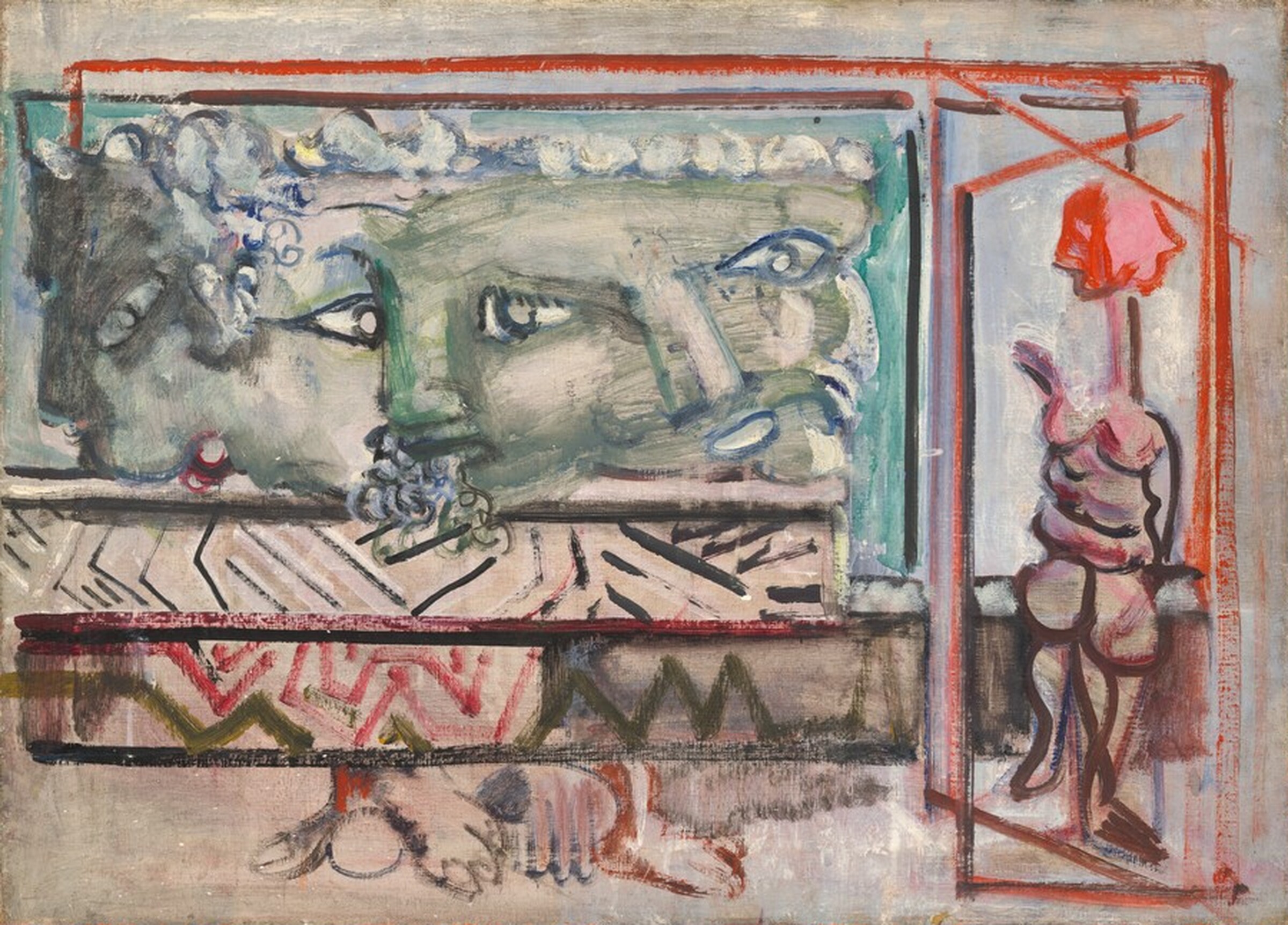
Untitled
¿Se puede contemplar?
Sí, recibe visitas

Galería Nacional de Arte
Sala615A · Edificio Este, torreWashington D. C., Estados Unidos
Expuesta al público. Quién lo avala figura más abajo.
- Comprobado
- hace 3 días
- En este estado desde
- 19 ago 2026
- Fuente
- Los datos de colección del propio museo
Ficha
- Número de inventario
- 1986.43.153
What it shows
En el catálogo
Fuentes
- Galería Nacional de Arte: the museum's own open data · obtenido hace 3 días
- Imagen: Galería Nacional de Arte — © the artist or rights holder
Mientras tanto, en la vida de Mark Rothko
La vida entera1949–1956
Large vertical canvases: being “inside” the picture
For seven years Rothko painted in oil only on large vertical canvases so that the viewer would feel “enveloped within” the painting. Critics saw this as compensating for a lack of substance; he replied that he painted large because he wanted to be intimate, and advised viewers to stand as close as eighteen inches away.
1950s
The poet Stanley Kunitz
The critic Dore Ashton saw Rothko’s acquaintance with the poet Stanley Kunitz as a significant bond of these years, their conversations feeding Rothko’s enterprise; Kunitz saw him as a primitive and a shaman who finds the magic formula.
1954
A Chicago show and a meeting with Sidney Janis
At a solo show at the Art Institute of Chicago in 1954 Rothko met the dealer Sidney Janis, who represented Pollock and Franz Kline; the relationship proved mutually beneficial.
1955
Branded a “sell-out”: the quarrel with Newman and Still
When Fortune magazine named a Rothko painting a good investment in 1955, Newman and Clyfford Still branded him a sell-out with bourgeois aspirations. Still asked for the paintings he had given Rothko over the years to be returned, and Rothko was deeply depressed by his former friends’ jealousy.
November 1958
The Pratt Institute talk: a “recipe” for a painting
In November 1958 Rothko spoke at the Pratt Institute, unusually treating art as a trade and listing the ingredients of a painting: a preoccupation with death, sensuality, tension, irony, wit and play, the ephemeral, and ten per cent hope to make the tragic more endurable.






![Scenes from the Passion of Christ: The Descent into Limbo [right panel], Andrea Vanni, 1380s](https://api.nga.gov/iiif/4205a539-eadd-4486-89a7-3cff9c1ba428/full/!2400,2400/0/default.jpg)


