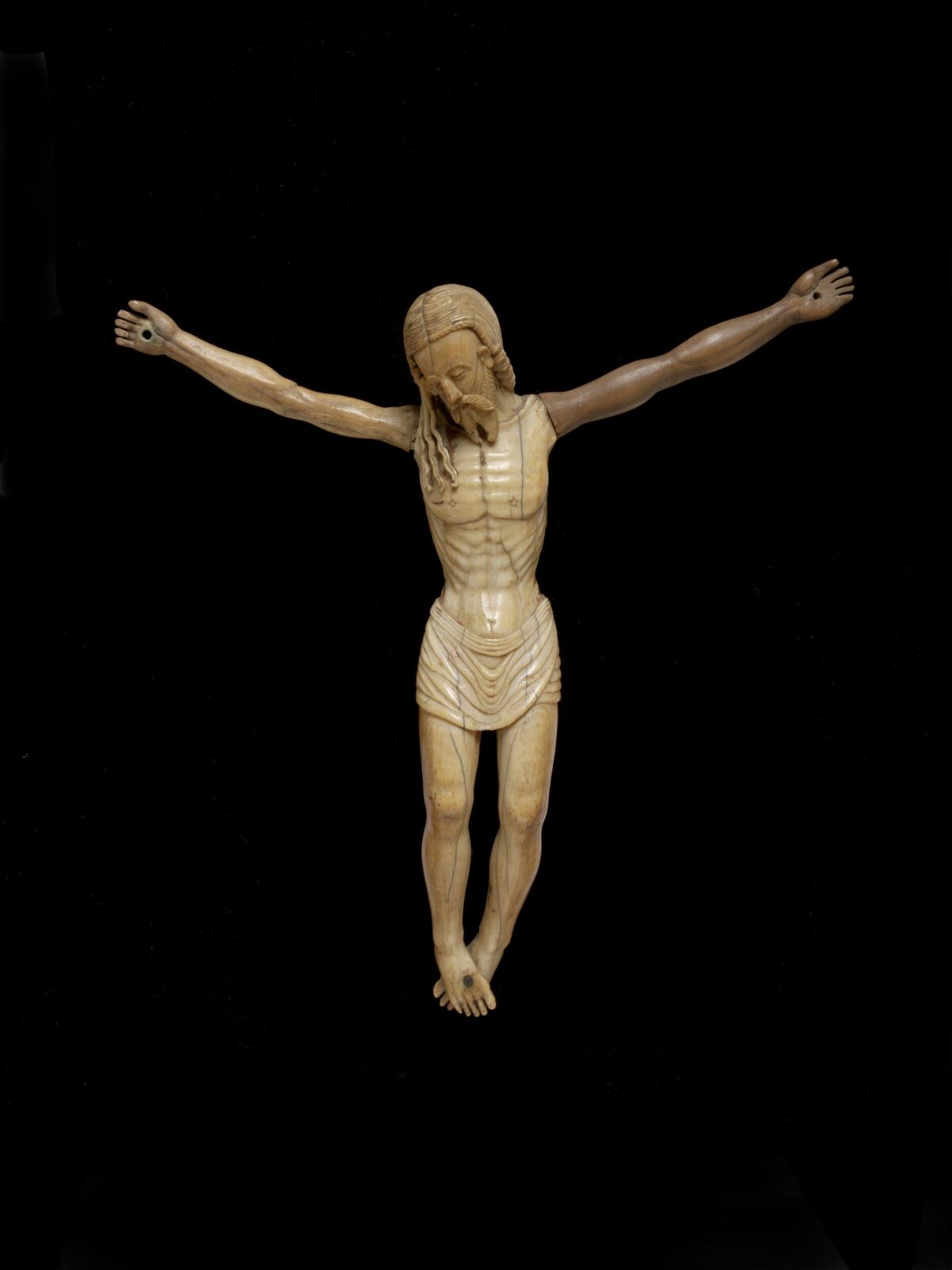
Crucifix figure
Peut-on la contempler ?
Elle ne reçoit pas en ce moment

Victoria and Albert Museum
Londres, Royaume-Uni
Elle appartient à la collection, mais n’est pas présentée en ce moment.
- Vérifié
- il y a 7 jours
- Dans cet état depuis
- 25 sept. 2026
- Source
- Les données de collection du musée lui-même
About the sculpture
This ivory statuette representing a Crucifix figure is made in ca. 1650. The missing left arm has been replaced in wood. Comparison with Cingalo-Portuguese carvings suggest that this figure was carved in Sri Lanka for the Portuguese market; the stylised linear carving on the loincloth is particularly characteristic of Cingalo-Portuguese ivories. Ivory sculptures were produced in large numbers in Portuguese Sri Lanka (formerly called Ceylon). From the sixteenth century onwards, the four main missionary Orders, the Augustinians, Jesuits, Dominicans and Franciscans, built churches and aimed to convert the inhabitants of India. The ivories would assist in the presentation of Christian imagery, as well as being exported back to churches, convents and private collectors in Europe.
Victoria and Albert Museum
Notice
- Numéro d’inventaire
- A.67-1927
What it shows
Au catalogue
Sources
- Victoria and Albert Museum: the museum's own open data · obtenue il y a 7 jours
- Image : Victoria and Albert Museum — © Victoria and Albert Museum, London