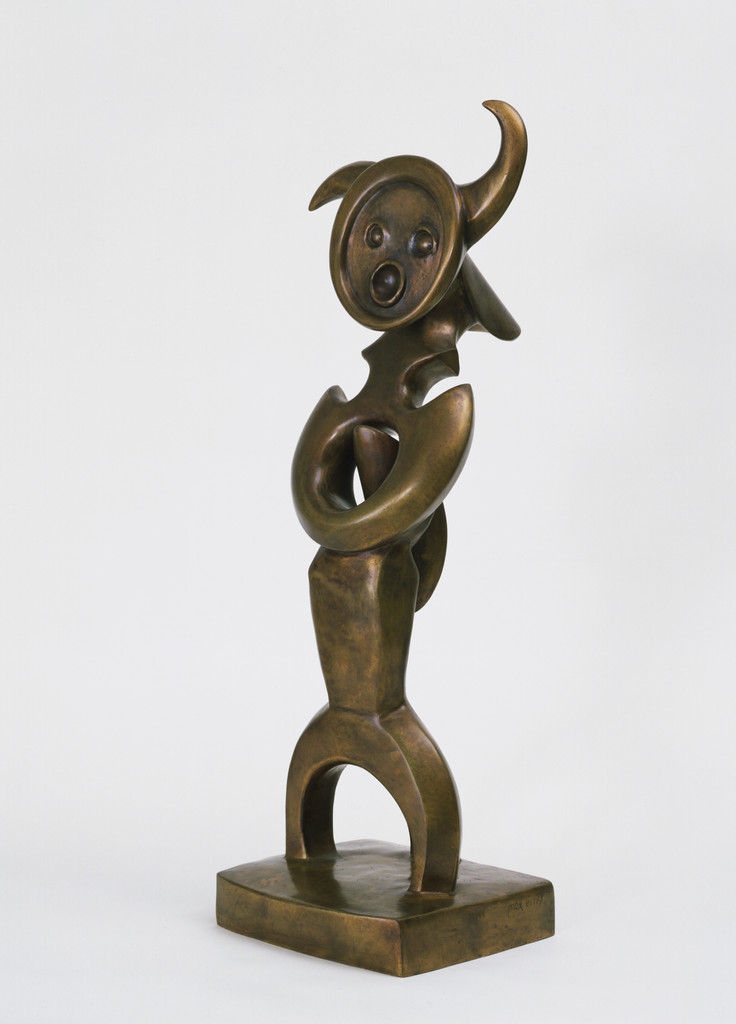
 Max ErnstFrance, 1891–1976
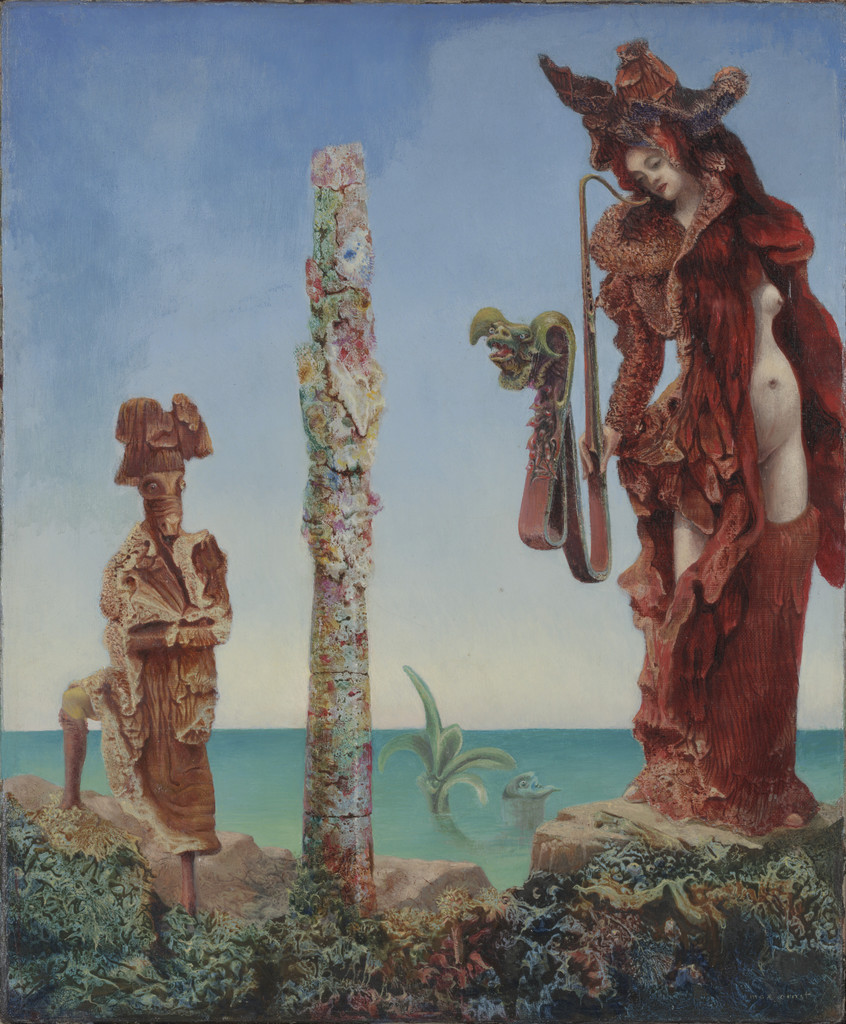
Moonmad
Peut-on la contempler ?
Elle ne reçoit pas en ce moment

Museum of Modern Art
New York, États-Unis
Elle appartient à la collection, mais n’est pas présentée en ce moment.
- Vérifié
- il y a 10 jours
- Source
- Les données de collection du musée lui-même
Notice
- Numéro d’inventaire
- 585.1973
Sources
- Museum of Modern Art: the museum's own open data · obtenue il y a 10 jours
- Image : Museum of Modern Art — © the artist or rights holder
Pendant ce temps, chez Max Ernst
La vie entièrelate 1942
Dorothea Tanning and “Birthday”
Selecting pictures for an exhibition of women artists at Peggy’s gallery, Ernst noticed Dorothea Tanning’s Birthday. Julien Levy introduced him to the painter, and a few meetings were enough for him to fall in love.
October 1942
“First Papers of Surrealism” and “Art of This Century”
In October 1942 the exhibition First Papers of Surrealism opened, its catalogue laid out as a list of modern myths in which “interplanetary communication” was credited to Ernst. That month Peggy Guggenheim’s gallery Art of This Century opened on 57th Street, and Ernst drew the cover of its catalogue.
October 1946
A double wedding in Hollywood with Man Ray
Ernst and Dorothea Tanning went to Hollywood to marry, asking Man Ray and his friend Juliet Browner to be their witnesses; the two decided to marry as well, and the result was a double ceremony in Beverly Hills.
1946–1953
Sedona: a house and “Capricorn” built with his own hands
Ernst built the house himself, helped by a young admirer and short of money, and made the 2.4-metre Capricorn, a seated bull-man, from empty bottles, springs and cement; the property became known as Capricorn Hill. The couple took an interest in the rites of the local Native American tribes, Ernst buying objects and masks from them, and friends visited only occasionally.
1948
The book “Beyond Painting”
In 1948 Ernst published the large essay Beyond Painting, compiled in Sedona; as a result of the book and its publicity he began to achieve financial success.
1950–1953
Return to France
According to the Russian account Ernst went back to France in 1950 and settled in Paris, while the English one has him in Sedona until 1953. From the 1950s he lived mainly in France and achieved financial success.