 Claude MonetFrancia, 1840–1926
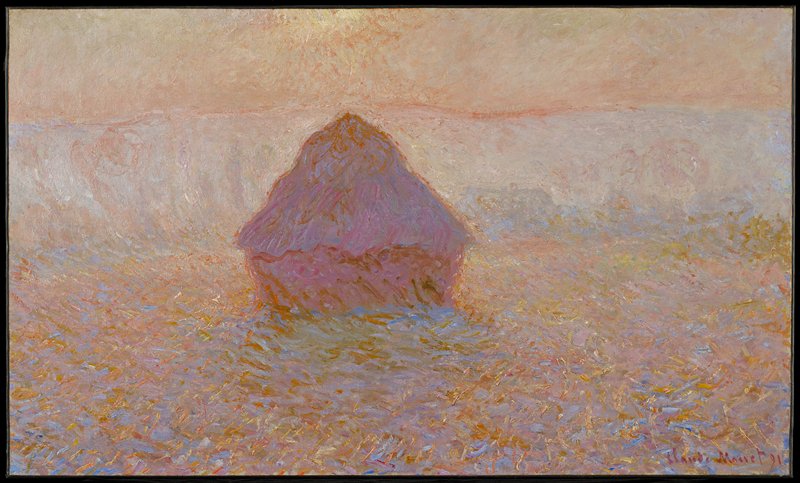
Grainstack, Sun in the Mist
Si può ammirare?
Sì, riceve visite

Minneapolis Institute of Art
SalaG355Minneapolis, Stati Uniti
Esposta al pubblico. Chi lo garantisce è indicato qui sotto.
- Verificato
- 3 giorni fa
- Ultimo cambio di stato
- 25 set 2026
- Fonte
- I dati di collezione del museo stesso
About the painting
In the late 1880s, Claude Monet analyzed visual perception by representing the same subject under varying conditions of light, atmosphere, and weather. In one such series, he depicted the grainstacks near his house in Giverny. These large, conical structures of wheat, 15 to 20 feet high, protected the grain from rain and rodents. Typical of farming practice in France, the stacks came to symbolize the country's rural prosperity.
Monet studied the grainstacks during different seasons as the sunlight changed in intensity. This picture shows the autumn dawn, at a moment when the sun burns off the rising mist. The grainstack is seen against the morning light, which forms a halo around it. Up close, one sees a flickering patchwork of broken brushstrokes, each one a notation of light. At a distance, these colors coalesce into a brilliant, shimmering image.
Read on
This frame is Gift of the Douglas and Mary Olson Frame Acquisition Fund.
Minneapolis Institute of Art
Scheda
- Numero di inventario
- 93.20
In catalogo
Fonti
- Minneapolis Institute of Art: the museum's own open data · acquisita 3 giorni fa
- Immagine: Minneapolis Institute of Art — public domain
Nel frattempo, nella vita di Claude Monet
Tutta la vita1883–1926 · Luogo di lavoro
Giverny
1890–1891
The "Haystacks" series
Monet painted a series of haystacks from different viewpoints and at different times of day — his first exhibited series: fifteen canvases were shown at Durand-Ruel's gallery in 1891.
1892
Second marriage: Alice Hoschedé
Monet married for the second time — to Alice Hoschedé, who even before then had helped him keep house and raise the children from his first marriage.
16 luglio 1892
Married: Alice Hoschedé
1892–1895
The "Rouen Cathedral" series
In 1892 Monet painted twenty-six views of Rouen Cathedral, recording the play of light and shadow on the facade in different atmospheric conditions. Twenty canvases from the series were exhibited in 1895.