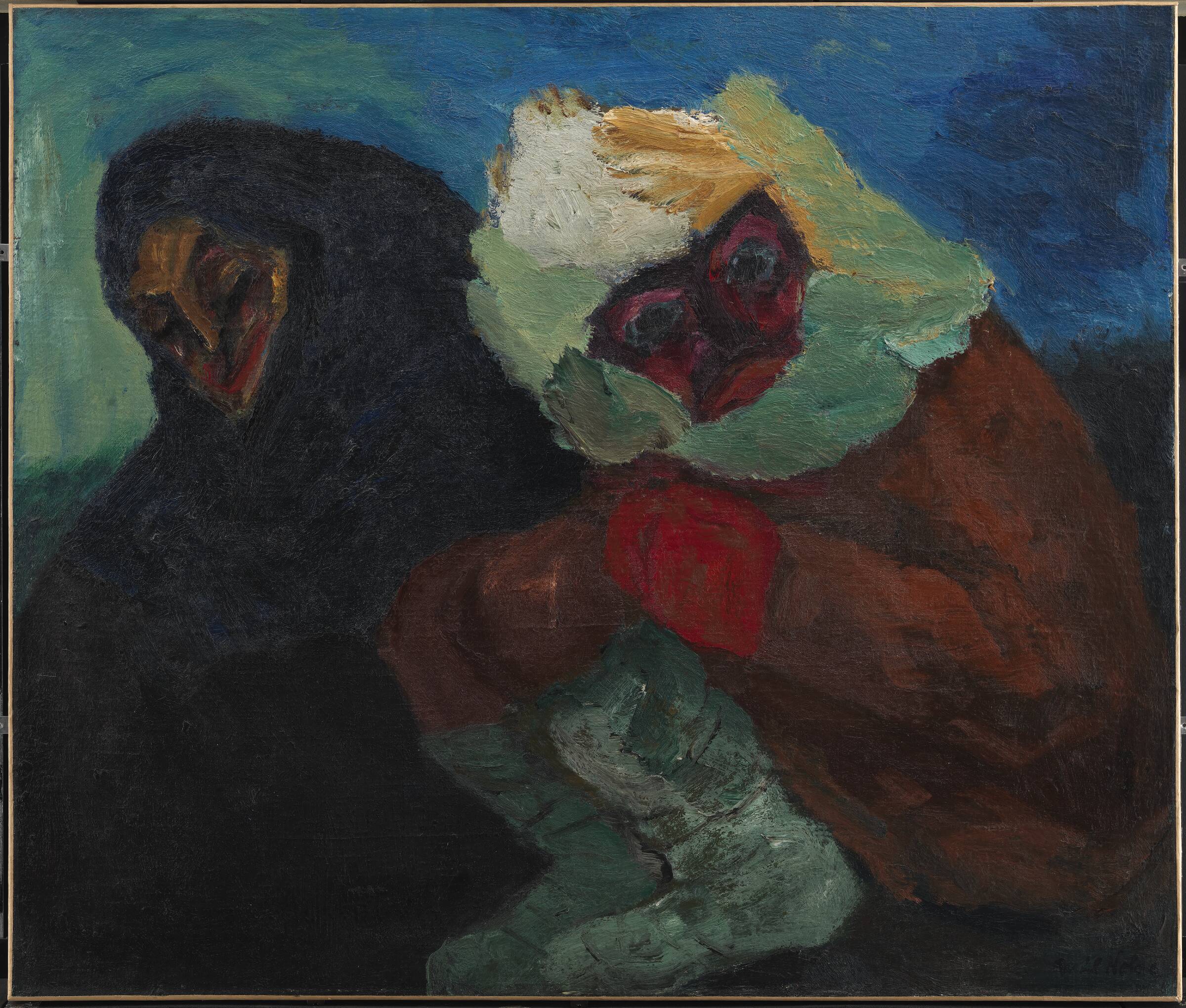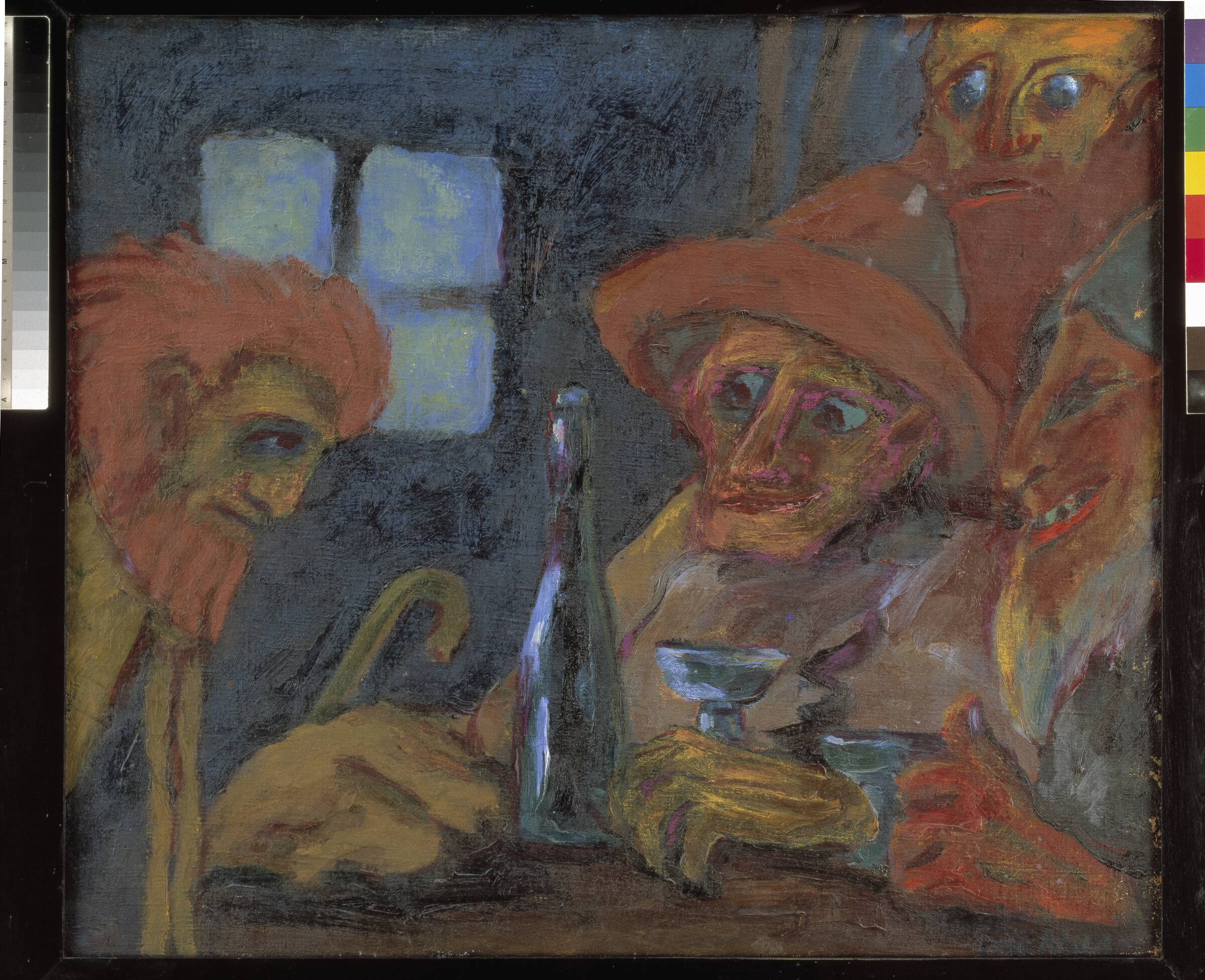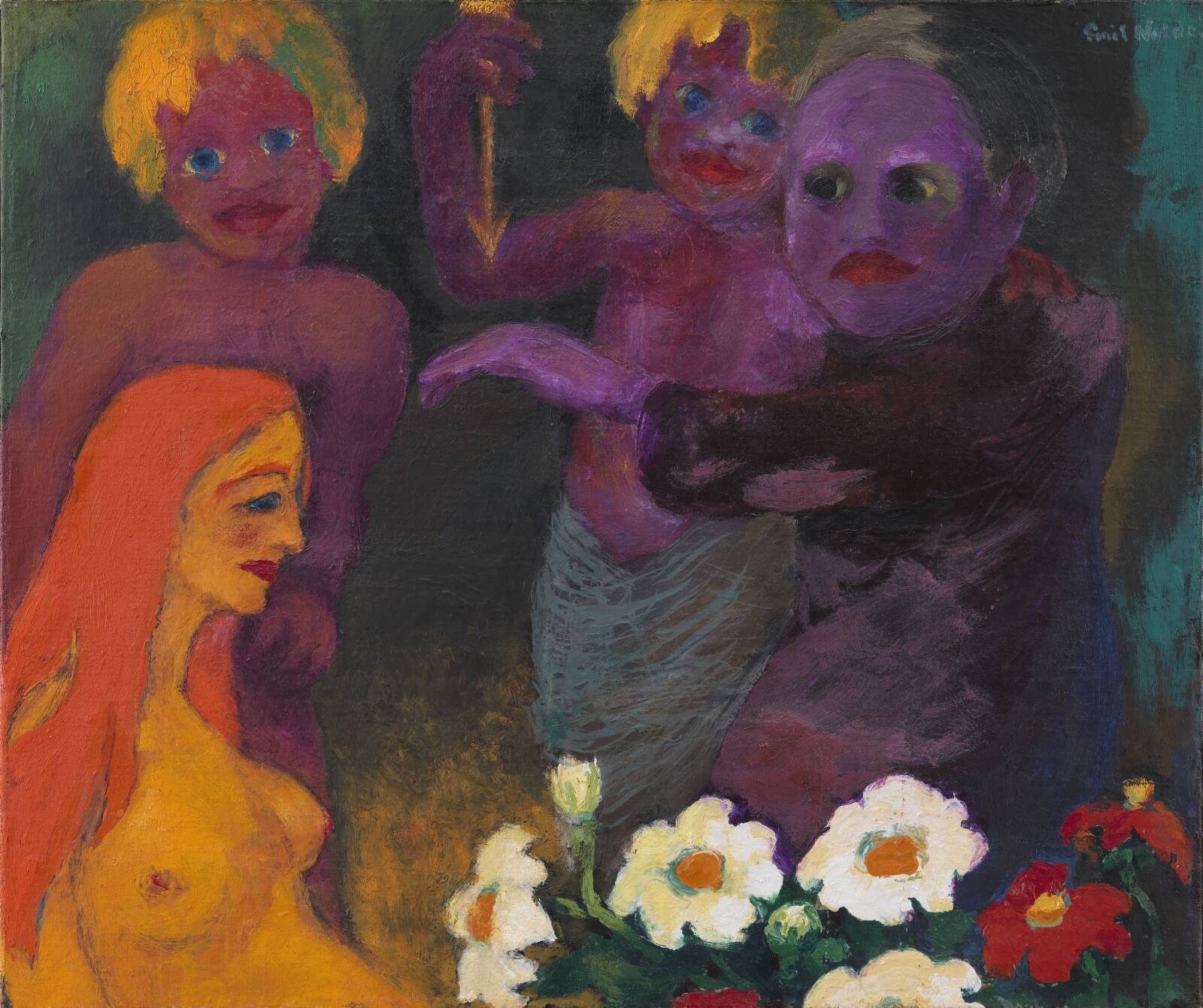
 Emil NoldeGermania, Danimarca, 1867–1956
Legende
Si può ammirare?
Sì, riceve visite

Statens Museum for Kunst
Sala270ACopenaghen, Danimarca
Esposta al pubblico. Chi lo garantisce è indicato qui sotto.
- Verificato
- 20 minuti fa
- Ultimo cambio di stato
- 28 set 2026
- Fonte
- I dati di collezione del museo stesso
Scheda
- Numero di inventario
- KMS6207
Andirivieni
Esposta · Sala 270A
Statens Museum for Kunst · 28 set 2026 — oggi · Verificato
Esposta
Statens Museum for Kunst · 19 ago 2026 — 28 set 2026 · Verificato
Fonti
- Statens Museum for Kunst: the museum's own open data · acquisita 3 giorni fa
- Immagine: Statens Museum for Kunst — © the artist or rights holder
Nel frattempo, nella vita di Emil Nolde
Tutta la vita1934
Joins the Nazi organisation of North Schleswig
Convinced of the “superiority of German art”, Nolde joined the National Socialist Working Association of North Schleswig (NSAN) in 1934; it was merged into the Danish section of the NSDAP during Gleichschaltung; by other accounts he had supported the Nazis since the early 1920s.
1937
“Degenerate Art”: over a thousand works confiscated
The Nazis declared Nolde’s art degenerate: “The Life of Christ” became one of the central exhibits of the “Degenerate Art” exhibition (1937), and 1,052 of his works were removed from museums, more than those of any other artist; some of what was confiscated was sold and some destroyed.
after 1937
Asks Goebbels to reconsider his art
After this Nolde appealed to Joseph Goebbels to reconsider his art and produced many propagandist graphic works of antisemitic content; he also appealed in person to the Gauleiter of Vienna, Baldur von Schirach.
1941
Forbidden to paint: the “Unpainted Pictures”
In 1941 Nolde was forbidden to paint, even in private; embittered, he withdrew to Seebüll and secretly made small watercolours, burying them in the ground. He made about 1,300 of them in all and called them his “Unpainted Pictures”.
until 1941
A house and studio on the hill of Seebüll
After the land at Utenwarf was drained, Nolde and his Danish wife Ada Vilstrup moved to German territory, where the countryside reminded him of his native Nolde; on the high hill of Seebüll near Neukirchen the couple bought an old cottage and later Nolde built to his own design a new house with a studio, rising above the surroundings like a medieval fortress.