.jpg?width=96) Vincent van GoghPaesi Bassi, 1853–1890
Vincent van GoghPaesi Bassi, 1853–1890Autoritratto
Self-portrait
Si può ammirare?
Non si sa: il museo mantiene il riserbo

Museo d'Orsay
Parigi, Francia
Il proprietario è noto. Se oggi sia esposta, il museo non lo dice, e a indovinare non ci hanno insegnato.
- Ultimo cambio di stato
- 29 set 2026
- Fonte
- I dati di collezione del museo stesso
About the painting
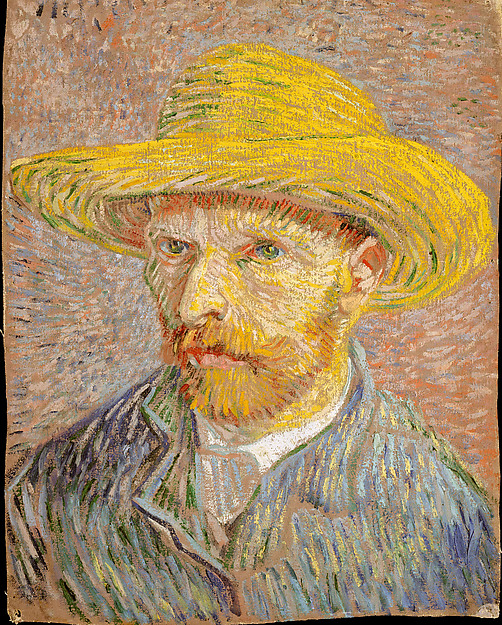
Autoritratto è un dipinto ad'olio su tela (65x54 cm) realizzato nel 1889 dal pittore olandese Vincent van Gogh. È tutt'oggi conservato nel Museo d'Orsay di Parigi.
Van Gogh dipinse un grande numero di autoritratti durante la sua carriera artistica e questo è considerato uno dei suoi più belli se non addirittura il migliore.
Fu realizzato nel settembre 1889 nel manicomio di Saint-Rémy-de-Provence, quando il pittore si era appena ristabilito da una lunga crisi psichiatrica durata due mesi durante la quale tentò di uccidersi ingerendo i colori chimici utilizzati per i dipinti. A proposito di questa tela, Van Gogh scrisse al fratello Theo: "Noterai come l'espressione del mio viso sia più calma, sebbene a me pare che lo sguardo sia più instabile di prima", sottolineando il mutamento avvenuto dopo il tentato suicidio.
Read on
Ed è appunto lo sguardo allucinato che colpisce subito chi osserva il dipinto, tanto da restare impresso in chi lo osserva. Ad esso va aggiunto il fondale formato da spirali grigio-verdi arrovellate, molto simili al fogliame dei cipressi dipinti in quel periodo, ma anche a fiamme di una fornace.
Antonin Artaud, ammiratore dell'opera di Vincent, commentò quest'opera affermando: "Uno sguardo che colpisce per immediatezza".
Il dipinto, portato dall'artista ad Auvers-sur-Oise, venne ceduto dal fratello Theo al Dottor Gachet insieme a molti altri dipinti come pagamento per le cure mediche, entrando a far parte della sua già ricca collezione privata (che comprendeva opere di Pissarro, Cézanne e Guillaumin) dove rimase per circa mezzo secolo; fu il figlio di Gachet, omonimo del padre, a donare la collezione al Louvre, e oggi si divide tra questo e il Museo d'Orsay.
Scheda
- Numero di inventario
- RF 1949 17
Fonti
- Wikidata · acquisita 3 giorni fa
- Immagine: Museo d'Orsay — Vincent van Gogh · Public domain · Wikimedia Commons
Nel frattempo, nella vita di Vincent van Gogh
Tutta la vitaFebruary 1888
To Arles, dreaming of a “Studio of the South”
The public still neither accepted nor bought his paintings, and in February 1888 Van Gogh left for Arles in the south of France to found a “Studio of the South”, a brotherhood of like-minded artists in which he gave Gauguin the leading role. Theo backed the plan with money.
23 October 1888
Gauguin arrives in Arles
After much pleading Gauguin arrived in Arles, and in November the two painted together: Gauguin portrayed Van Gogh in “The Painter of Sunflowers”, and their first joint outing was to the Alyscamps. At Gauguin's suggestion Vincent painted from memory, producing “Memory of the Garden at Etten”.
23 December 1888
The severed ear
After an altercation on the evening of 23 December, Van Gogh, seemingly hearing voices, severed his left ear, wholly or in part, with a razor and delivered it, wrapped in paper, to a woman at a brothel. Next morning a policeman found him unconscious; in hospital he was diagnosed with “acute mania with generalised delirium”.
May 1889
Voluntarily into the Saint-Paul asylum
Van Gogh left Arles and voluntarily entered the Saint-Paul-de-Mausole asylum, a former monastery in Saint-Rémy-de-Provence, accompanied by the Protestant clergyman Frédéric Salles. Of his two cells with barred windows one became a studio, and the clinic and its garden became the main subjects of his paintings.
27 July 1890
A fatal wound: a revolver shot
Out painting, Van Gogh shot himself in the chest with a revolver he had bought to scare off birds while working outdoors; the bullet passed below his heart, and he made his own way back to his room at the inn. Theo arrived the next day and stayed with him to the end; according to Theo, Vincent's last words were: “The sadness will last forever.”
29 luglio 1890
Died