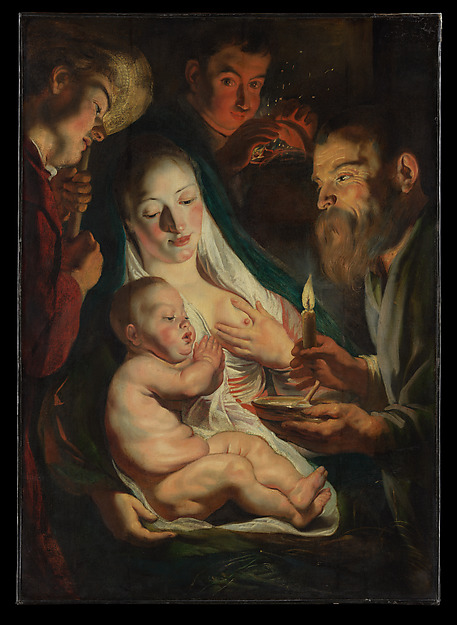
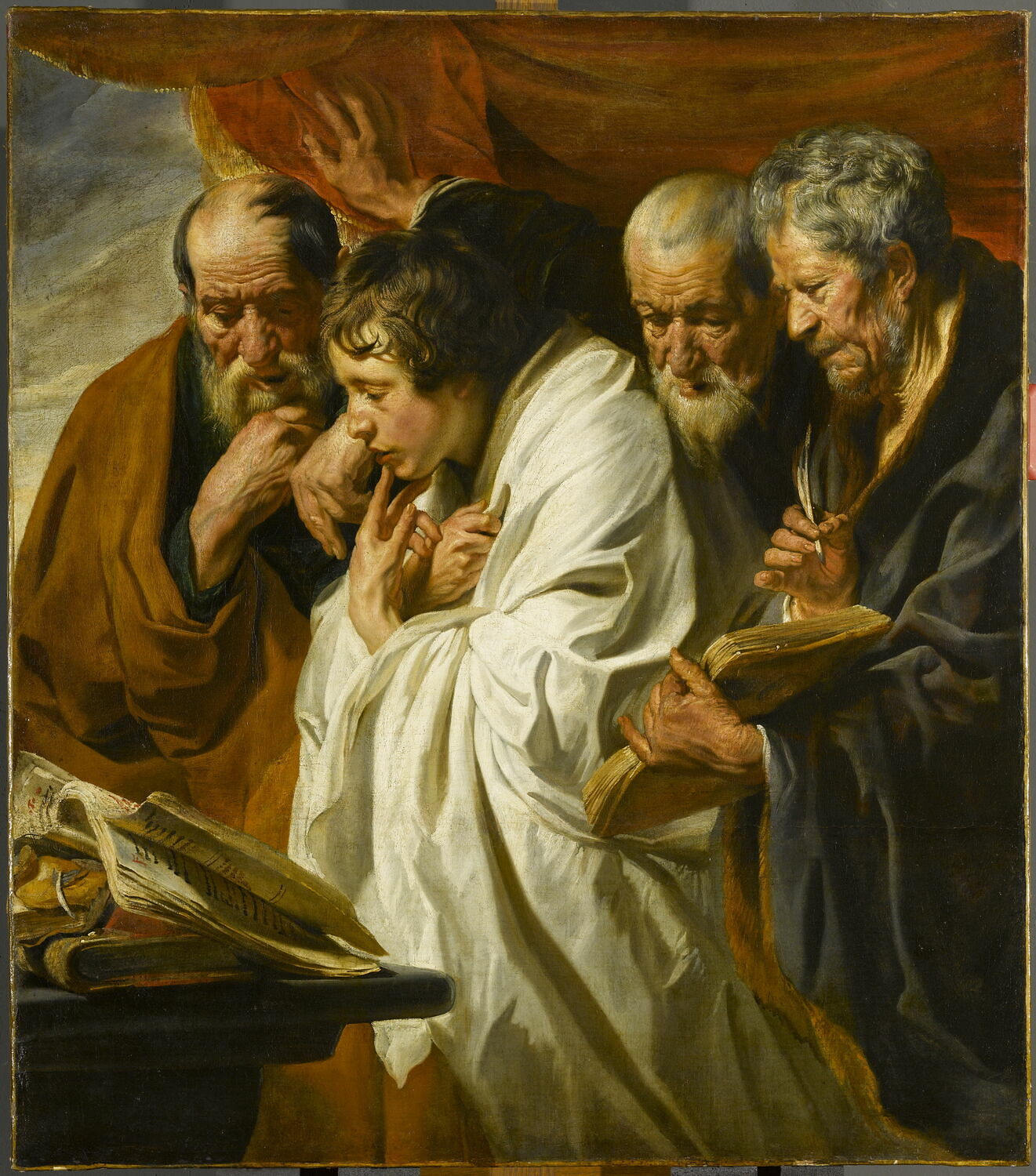
Jacques JordaensFiandre, 1593–1678
The Lamentation
Si può ammirare?
Al momento non riceve

Ermitage
San Pietroburgo, Russia
Appartiene alla collezione, ma al momento non è esposta.
- Verificato
- 29 ago 2026
- Ultimo cambio di stato
- 30 ago 2026
- Fonte
- I dati di collezione del museo stesso
Scheda
- Numero di inventario
- ГЭ-5592
In catalogo
Fonti
- Ermitage: the museum's own open data · acquisita 29 ago 2026
- Immagine: Ermitage — Museum open access
Nel frattempo, nella vita di Jacques Jordaens
Tutta la vita1621–1667
His workshop: fifteen pupils in the guild records
Between 1621 and 1667 the guild registered fifteen pupils with Jordaens (the best known being Jan Boeckhorst), and six more are named in court documents; his son Jacob and his cousin Arnoldus also trained with him. His fame drew foreigners: after 1642 the Polish painter Aleksander Jan Tricius became his pupil, and in 1645 Queen Christina of Sweden meant to send her protégé Georg Waldau, but the threat of war in Flanders prevented it.
1648
The Peace of Münster and Antwerp's Calvinists
The peace that recognised the Dutch Republic should have brought Protestants toleration, but in Spanish-ruled Antwerp they continued to be repressed. After the peace a Calvinist congregation was established in the city — Jordaens, his wife and his daughter Elisabeth were members.
21 April 1648
Queen Christina's commission: 35 ceilings for Uppsala
Queen Christina of Sweden commissioned 35 large ceiling paintings from Jordaens for Uppsala Castle. Whether he completed the commission, or whether the works ever reached Sweden, is unknown.
25 August 1648
A patron accuses him of passing off studio work
Martinus van Langenhoven accused Jordaens of not painting the commissioned pictures himself: as his popularity grew, so did the share of work done by pupils. The painter's defence was that he personally put the finishing touches to works executed by his assistants.
1651
Amalia van Solms's commission for the Orange Hall
The widow of Stadtholder Frederick Henry of Orange invited artists to decorate the Huis ten Bosch in The Hague; for its Orange Hall Jordaens painted the large allegory “The Triumph of Frederick Henry”, celebrating the prince's military successes. Other accounts date the commission for the hall to 1645.
1651–1658
Fined for “heretical” writings
The schout (chief law officer) of Antwerp fined Jordaens 200 pounds and 15 shillings for his “scandalous”, that is heretical, writings (other accounts give 1651–1659 and speak of “heretical” works). As a famous master he was tolerated as long as he did not speak openly on matters of faith.