
 Mark RothkoStati Uniti, 1903–1970
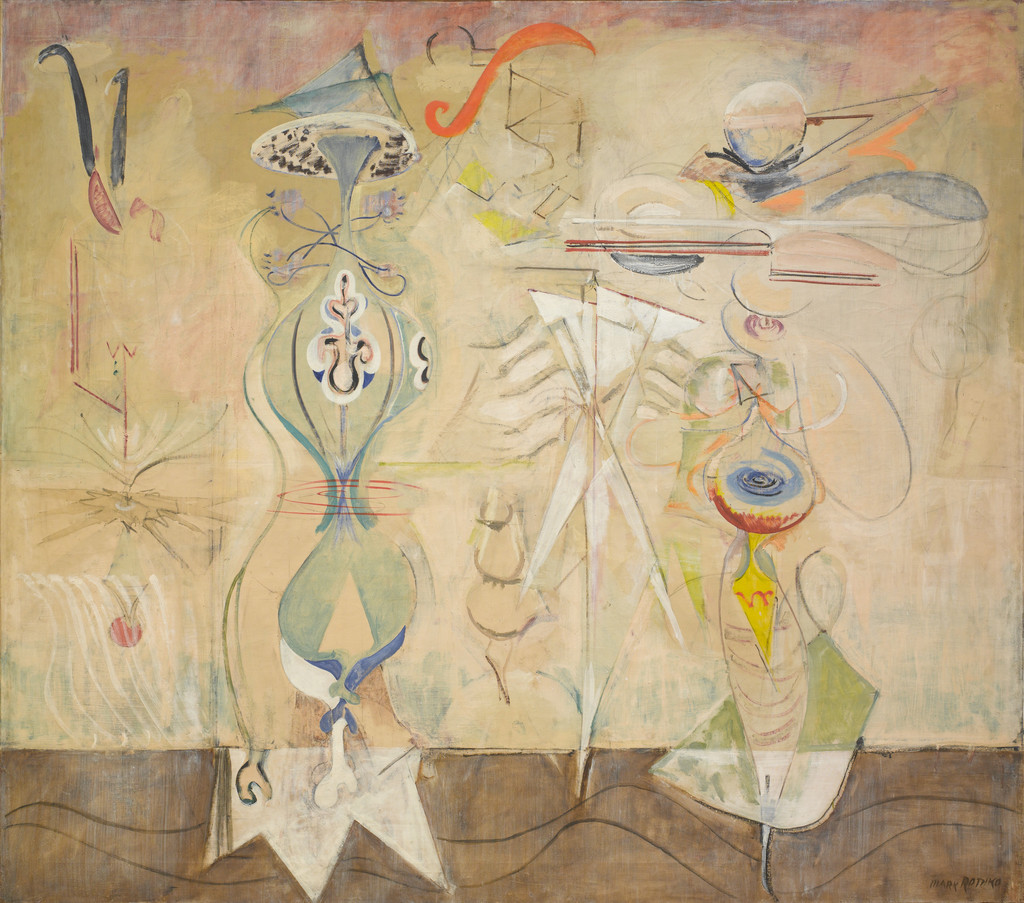
Untitled
Si può ammirare?
Sì, riceve visite

National Gallery of Art
Sala615A · Edificio Est, torreWashington, Stati Uniti
Esposta al pubblico. Chi lo garantisce è indicato qui sotto.
- Verificato
- 10 minuti fa
- Ultimo cambio di stato
- 19 ago 2026
- Fonte
- I dati di collezione del museo stesso
Scheda
- Numero di inventario
- 1986.43.32
What it shows
In catalogo
Fonti
- National Gallery of Art: the museum's own open data · acquisita 3 giorni fa
- Immagine: National Gallery of Art — © the artist or rights holder
Nel frattempo, nella vita di Mark Rothko
Tutta la vita21 February 1938
Becomes a US citizen
On 21 February 1938 Rothko received American citizenship, relieved: he had feared that the growing influence of the Nazis in Europe might lead to the sudden deportation of Jews without citizenship.
1940
Shortens his name to Mark Rothko
Concerned about rising antisemitism in Europe and America, Rothko shortened “Markus Rothkowitz” to “Mark Rothko” in 1940; “Roth” still sounded identifiably Jewish, so he settled on “Rothko”. All his works have been signed with that name since.
1940
A pause in painting for the study of myth
In 1940, it is said, Rothko stopped painting altogether to immerse himself in James Frazer’s The Golden Bough and Freud’s The Interpretation of Dreams; he later said his approach had been “reformed” by the study of the dramatic themes of myth.
1942
The Rothko–Gottlieb manifesto after the Macy’s show
New paintings were shown at a 1942 exhibition at Macy’s department store; answering a negative review in The New York Times, Rothko and Gottlieb issued a manifesto written mainly by Rothko, declaring themselves for the simple expression of the complex thought, for the large shape and for flat forms that destroy illusion and reveal truth.
1943
Berkeley: friendship with Clyfford Still
Hoping a change of scenery would help, Rothko returned to Portland and then travelled to Berkeley, where he met Clyfford Still and the two became close friends; Still’s deeply abstract paintings are thought to have influenced Rothko’s later work.
13 June 1943
Separation from Edith Sachar and depression
On 13 June 1943 Rothko and Edith Sachar separated again, and the divorce (1944) left him depressed for a long time.




![Scenes from the Passion of Christ: The Descent into Limbo [right panel], Andrea Vanni, 1380s](https://api.nga.gov/iiif/4205a539-eadd-4486-89a7-3cff9c1ba428/full/!2400,2400/0/default.jpg)


