Tulsi
Painting
お目にかかれますか?
ただいまはお迎えしていません

ヴィクトリア&アルバート博物館
ロンドン, イギリス
コレクションに属していますが、現在は展示されていません。
- 確認
- 7 日前
- この状態になった日
- 2026年9月25日
- 出典
- 美術館自身の所蔵データ
About the painting
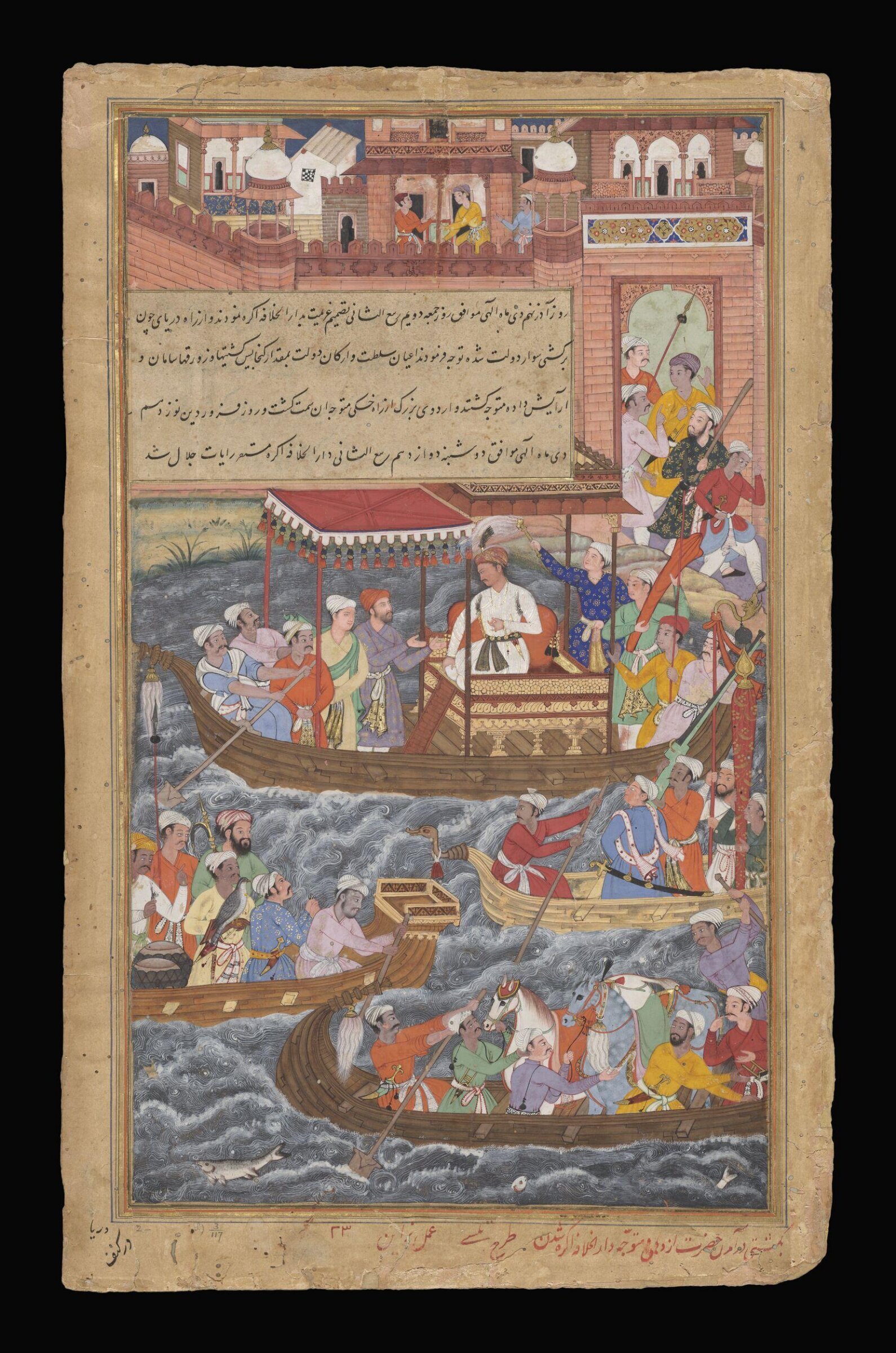
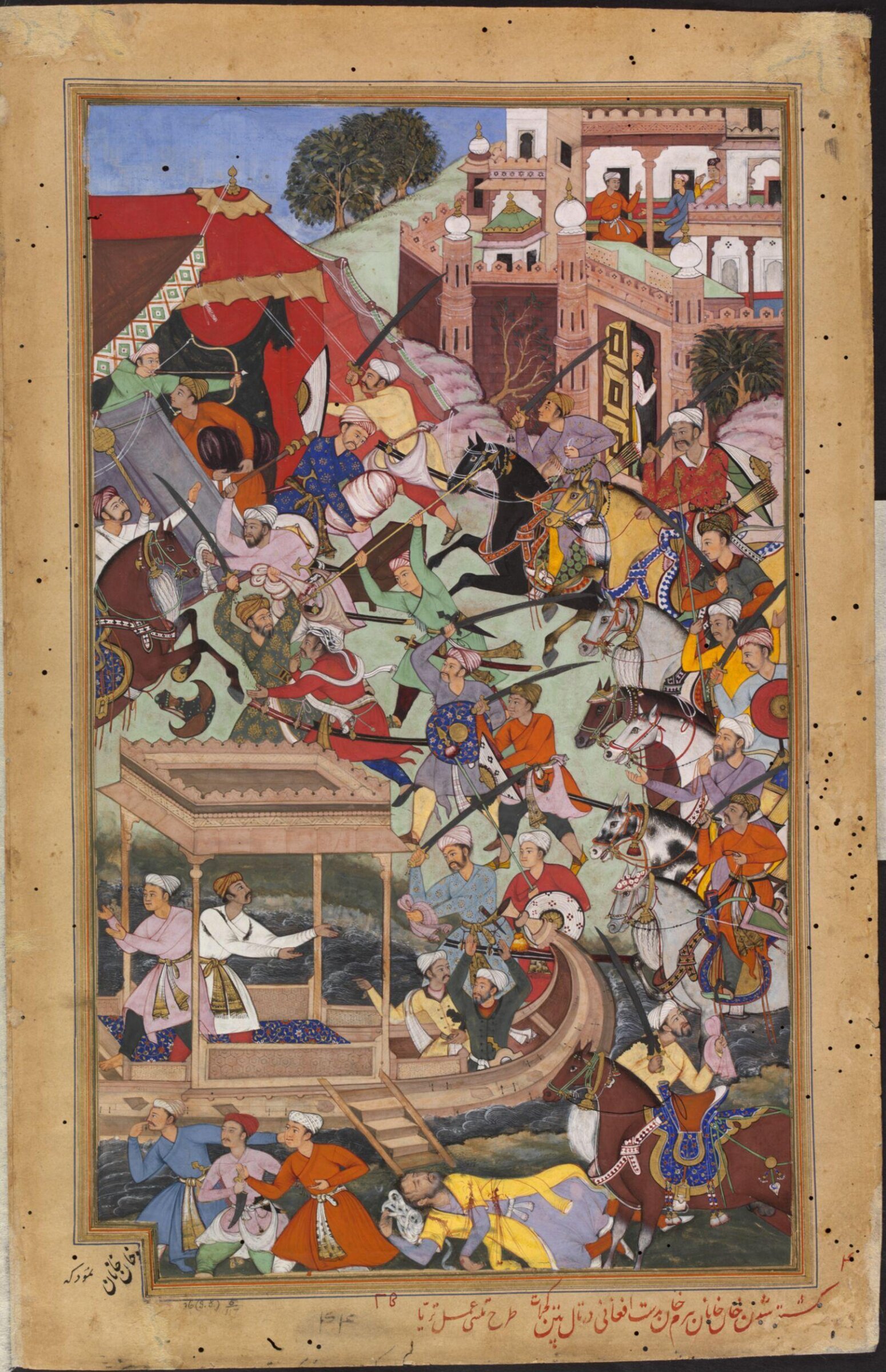
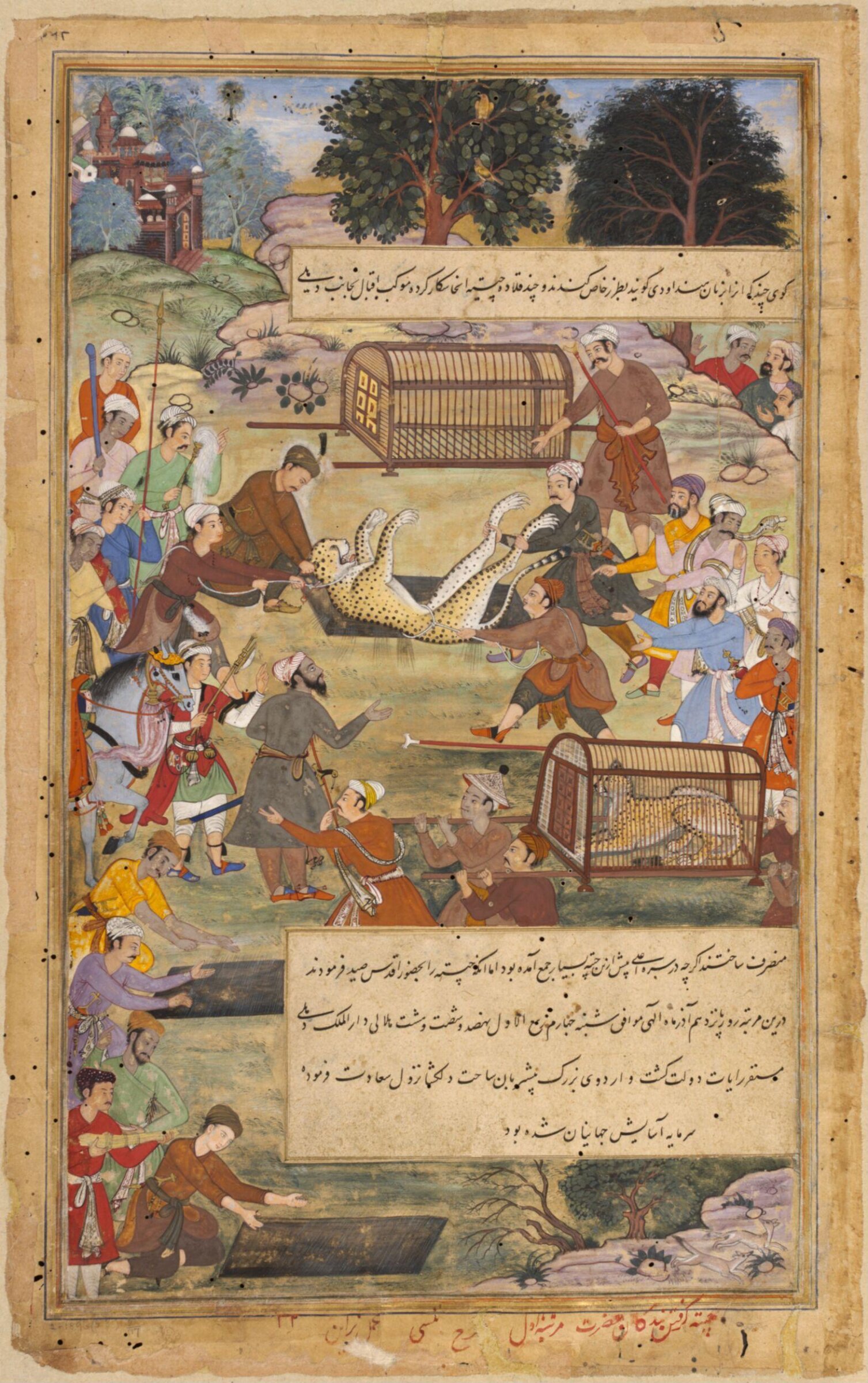
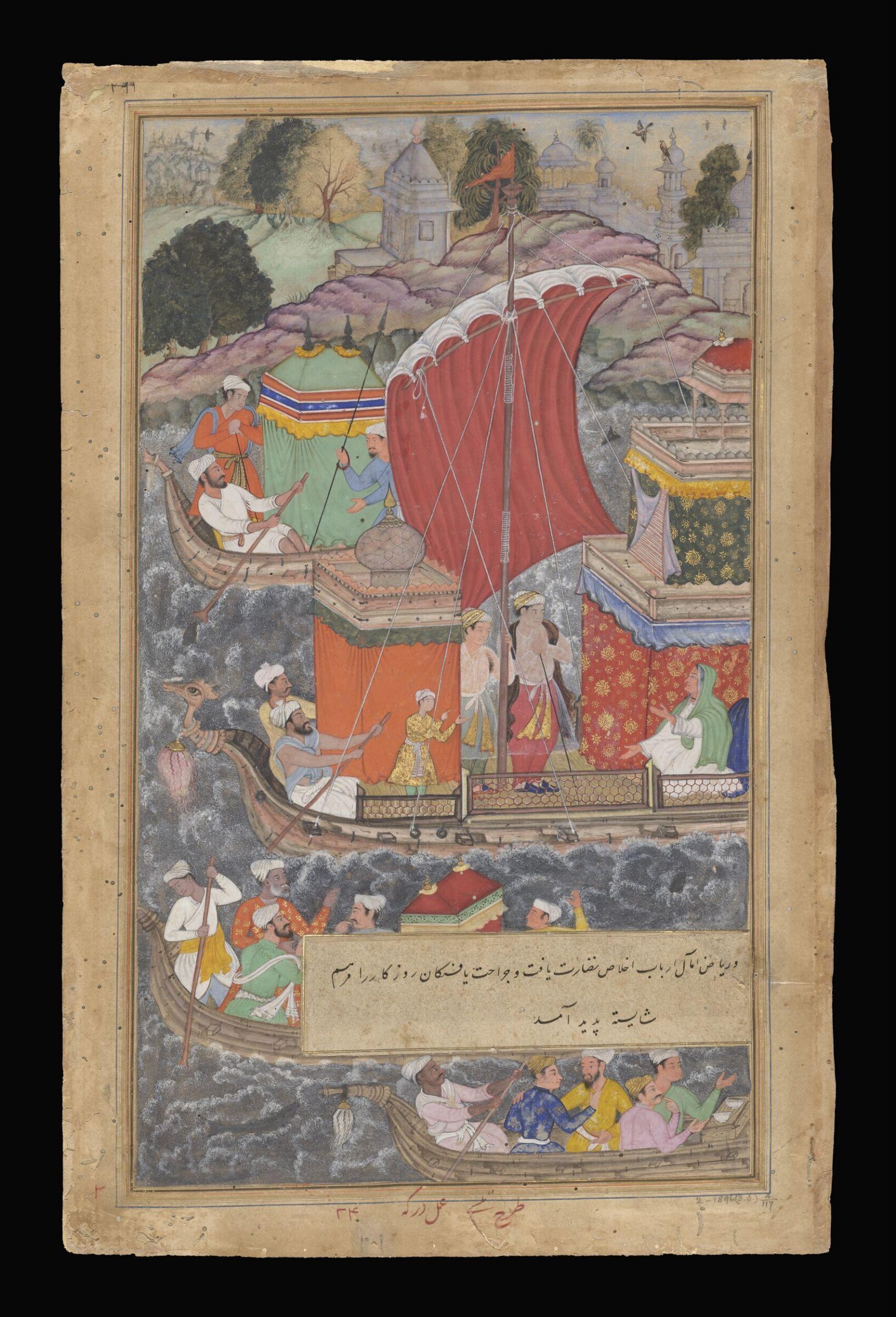
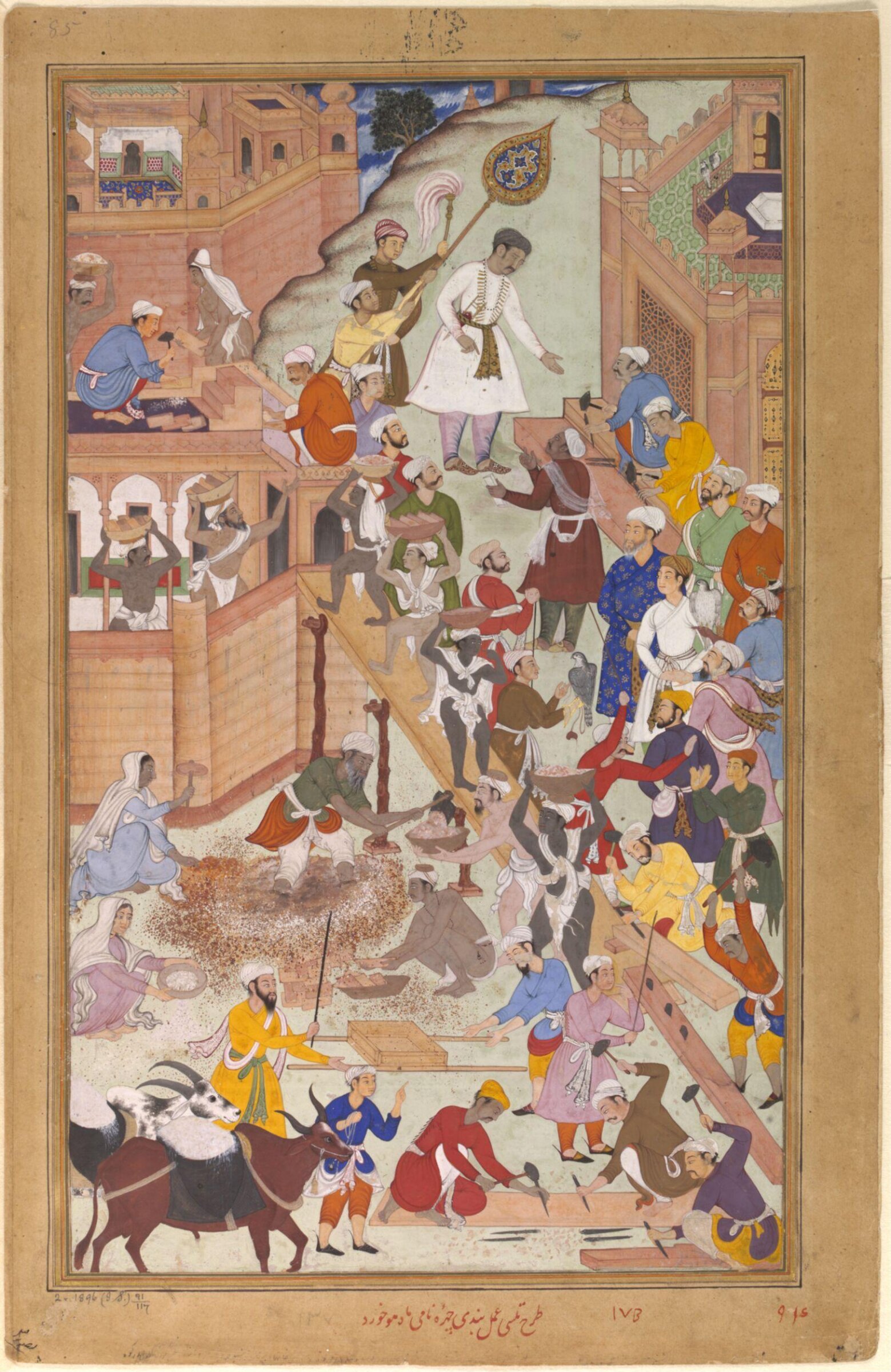
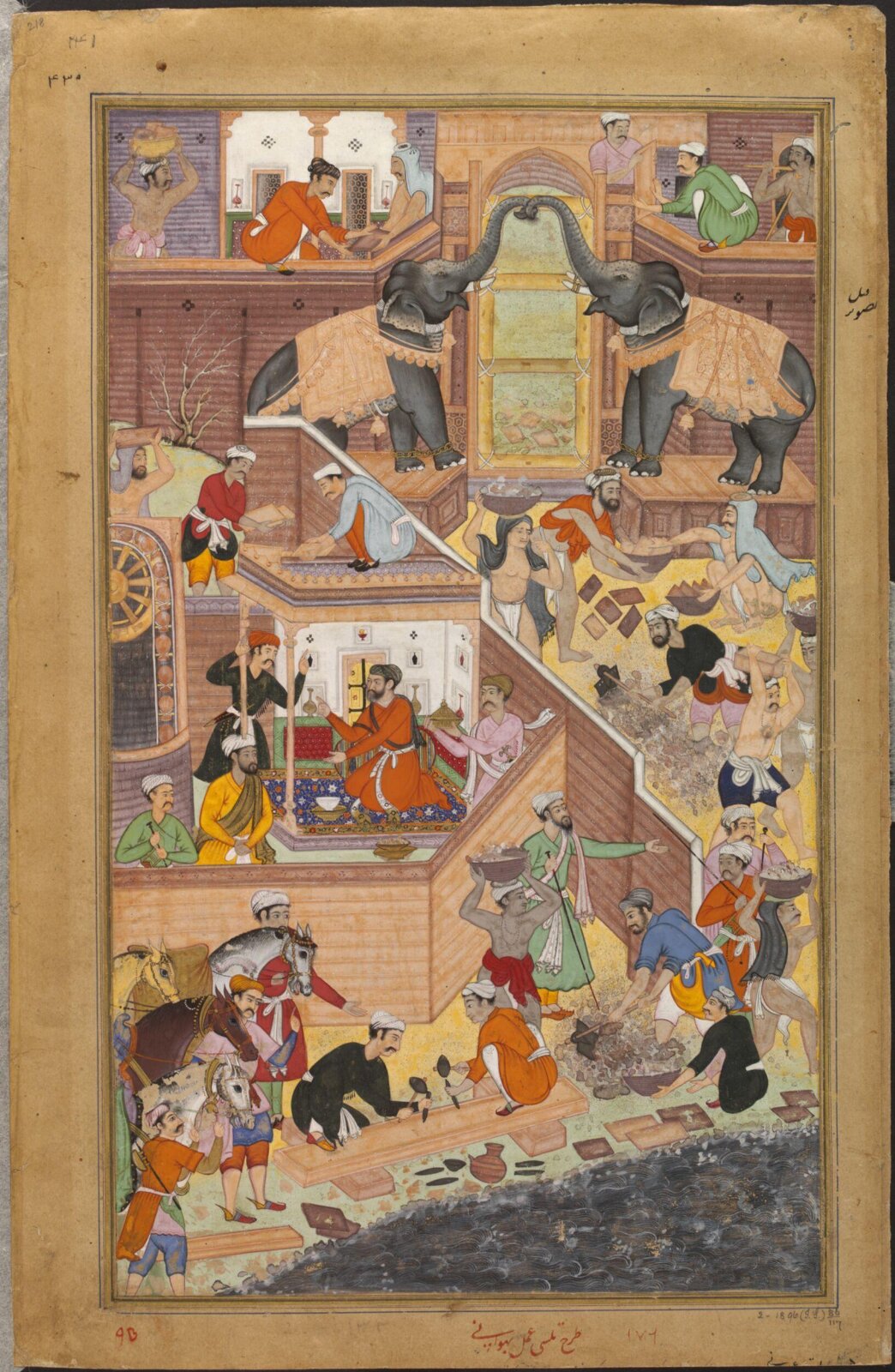
This illustration from the Akbarnama depicts a stage in the construction of the new royal city of Fathpur ('City of Victory', and later known as Fathpur Sikri) in 1571. In 1571, after the births of his sons Salim and Murad, Akbar issued an order for a great city to be constructed at Sikri, 38 kilometers east of Agra. A palace, houses, a bazaar, mosques, schools, baths and gardens, were all contained within 11 kilometers of high fortified walls. Initially called Fathabad, the city was soon renamed Fatehpur, both meaning ‘City of Victory’ in reference to Akbar’s successful campaign in Gujarat in 1573. It was the capital until 1585 when Akbar transferred it to Lahore.
Read on
The construction work is directed by an aristocratic figure seated within a pavilion whose rich interior includes a fine carpet and tiled walls. To the left is a water wheel (saqiya), the device borrowed from Iranian tradition and widely used to draw water from deep wells.
The elephants flanking the gateway are clearly real animals and may have been used to help lift heavy materials, but two elephants were also carved into the stone in high relief on the Hathiya Pol (‘Elephant gate’) at Fathpur, as Father Monserrate recorded when he arrived at the city with the first Jesuit mission from Goa in 1580. [Akbarnama, English translation: Beveridge, vol. II, pp. 530-1; vol. III, pp. 157-160]
The composition (tarh) of this painting is by Tulsi, the "work" ('amal) of applying the colours is by Bandi, and the faces of the most important personages are by Madhav Khord , as the inscription in red in the lower margin specifies.
The Akbarnama was commissioned by the emperor Akbar as the official chronicle of his reign. It was written by his court historian and biographer Abu'l Fazl between 1590 and 1596 and is thought to have been illustrated between about 1592 and 1594 by at least 49 different artists from Akbar's studio. After Akbar's death in 1605, the manuscript remained in the library of his son, Jahangir (r. 1605-1627) and later Shah Jahan (r.1628-1658). The Victoria and Albert Museum purchased it in 1896 from Mrs Frances Clarke, the widow of Major-General John Clarke, who bought it in India while serving as Commissioner of Oudh between 1858 and 1862.
ヴィクトリア&アルバート博物館
作品データ
- 収蔵番号
- IS.2:86-1896
What it shows
カタログ収録
出典
- ヴィクトリア&アルバート博物館: the museum's own open data · 7 日前に取得
- 画像: ヴィクトリア&アルバート博物館 — © Victoria and Albert Museum, London