How it works
What We Mean When We Say “On View”
Every green badge on ART WIKI is a claim with a source and a timestamp behind it. Here is the honesty contract, in full.
2026年8月14日 · 6分で読めます · ART WIKI編集部
It is surprisingly hard to know whether you can stand in front of a painting today. Museums rotate galleries, send works on loan, close rooms for conservation. Most websites — including many museums' own — show collection records, not display states. ART WIKI was built around the difference.
Four separate facts
Ownership is who the work belongs to. Custody is who physically holds it. Location is where it is. Display is whether the public can see it. Our data model stores each separately, because history keeps proving they diverge: a painting can be owned in Boston, held by a conservator in Amsterdam, and displayed nowhere.
The confidence ladder
Verified means the owning museum's own machine-readable data asserts the state — like Chicago's is_on_view flag or the Met's gallery numbers. Reported means documented publicly, but not by a live feed — our editorial records of the Gardner theft, for example. We never write Inferred states in the demo dataset, and Unknown means exactly that. Every state carries the timestamp of its last confirmation, and it ages in public.
“Prefer unknown over false certainty.”
— ART WIKI design principles
When a state changes on re-ingest — a work comes off view, or returns — the old state is closed with its dates and kept forever. The graph doesn't overwrite history; it accumulates it.
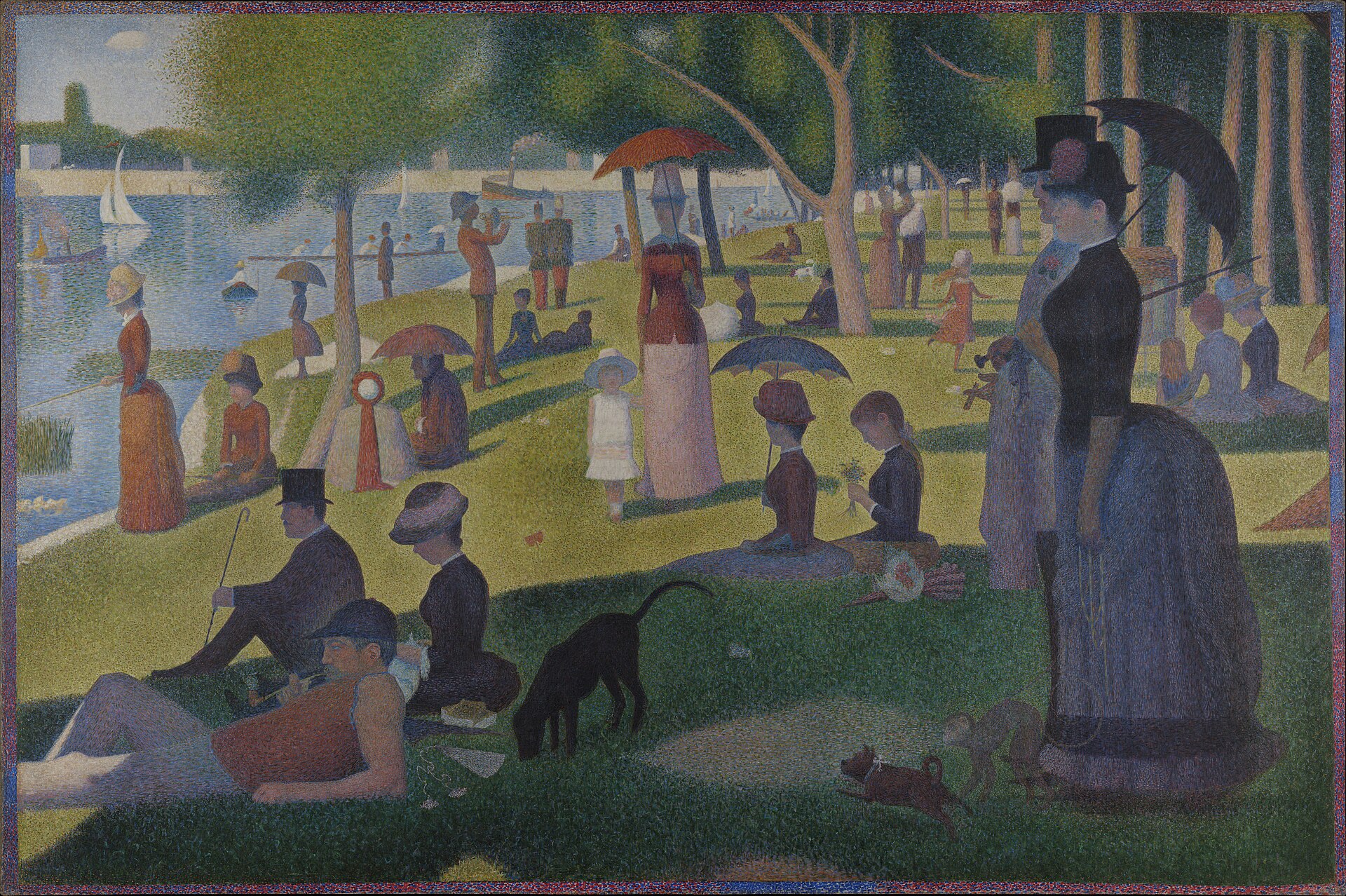
表紙: グランド・ジャット島の日曜日の午後 — Georges Seurat. Public domain (PD-Art), via Wikimedia Commons
あわせて読みたい
How it works
Where Our Data Comes From
No scraping, no guessing: ART WIKI is built on museums' own open-access APIs, public-domain imagery, and editorial records that cite their sources. A tour of the workshop.
Can I see it?
Five Vermeers, One Room
Of the roughly 34 surviving paintings by Johannes Vermeer, five hang in a single gallery in New York. It is the densest concentration of Vermeer on Earth — and you can walk in today.