.jpg?width=96) Vincent van GoghNederland, 1853–1890
Vincent van GoghNederland, 1853–1890Olive Trees
Mag men het zien?
Ja, het ontvangt bezoek

Minneapolis Institute of Art
ZaalG355Minneapolis, Verenigde Staten
Publiek tentoongesteld. Wie daarvoor instaat, staat hieronder.
- Gecontroleerd
- 3 dagen geleden
- Ongewijzigd sinds
- 25 sep 2026
- Bron
- De eigen collectiegegevens van het museum
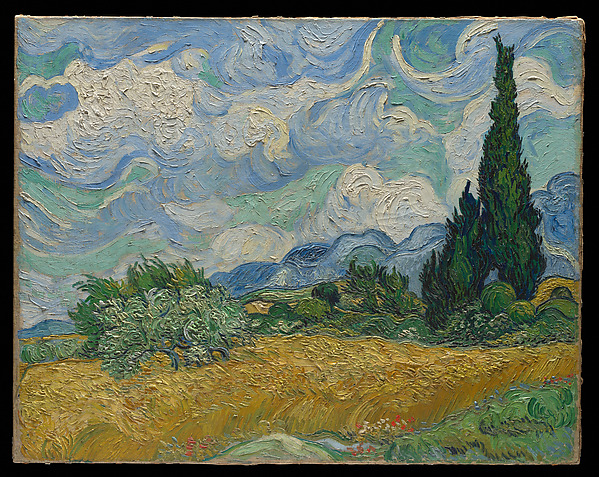
About the painting
This is one of fifteen canvases of olive trees that van Gogh executed between June and December of 1889. Earlier that year he had interned himself in the asylum of St-Paul, in the town of St-Rémy in southern France, where he would create his most profound works. The vibrant oranges and yellows suggest that the picture dates to the autumn months. Van Gogh left St-Rémy in May 1890, moving to Auvers, near Paris, where he continued to paint until his death by suicide in July.
Minneapolis Institute of Art
Gegevens
- Inventarisnummer
- 51.7
In de catalogus
Bronnen
- Minneapolis Institute of Art: the museum's own open data · opgehaald 3 dagen geleden
- Afbeelding: Minneapolis Institute of Art — public domain
Intussen, in het leven van Vincent van Gogh
Het hele leven1888
Paints “Sunflowers”
Preparing for Gauguin's arrival, Van Gogh painted four versions of “Sunflowers” in one week. “In the hope of living in a studio of our own with Gauguin,” he wrote to Theo, “I'd like to do a decoration for the studio. Nothing but large Sunflowers.”
February 1888
To Arles, dreaming of a “Studio of the South”
The public still neither accepted nor bought his paintings, and in February 1888 Van Gogh left for Arles in the south of France to found a “Studio of the South”, a brotherhood of like-minded artists in which he gave Gauguin the leading role. Theo backed the plan with money.
23 October 1888
Gauguin arrives in Arles
After much pleading Gauguin arrived in Arles, and in November the two painted together: Gauguin portrayed Van Gogh in “The Painter of Sunflowers”, and their first joint outing was to the Alyscamps. At Gauguin's suggestion Vincent painted from memory, producing “Memory of the Garden at Etten”.
23 December 1888
The severed ear
After an altercation on the evening of 23 December, Van Gogh, seemingly hearing voices, severed his left ear, wholly or in part, with a razor and delivered it, wrapped in paper, to a woman at a brothel. Next morning a policeman found him unconscious; in hospital he was diagnosed with “acute mania with generalised delirium”.
1889
Paints “The Starry Night”
At the Saint-Paul asylum Van Gogh worked tirelessly, producing more than 150 paintings and about 100 drawings and watercolours in a year. Among them is “The Starry Night”, charged, like other works of this time, with intense nervous tension and dynamism.
29 juli 1890
Died