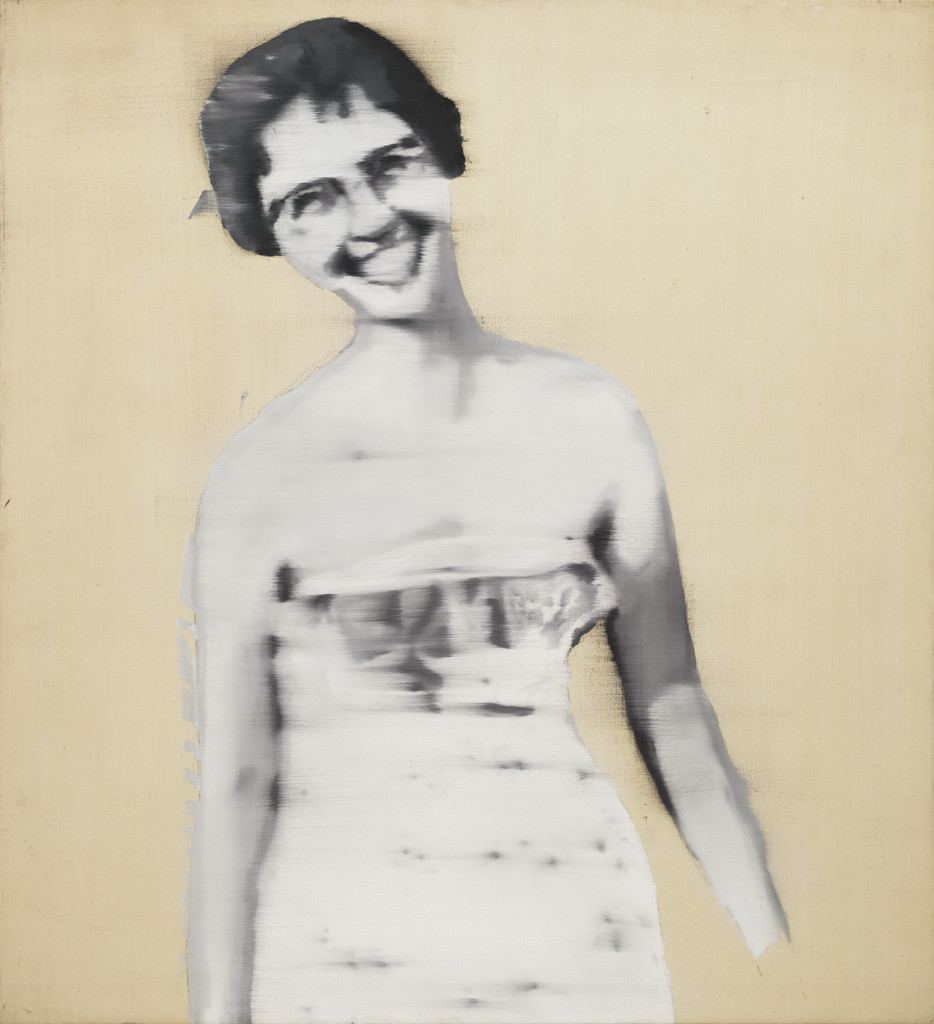
 Gerhard RichterAlemanha, 1932
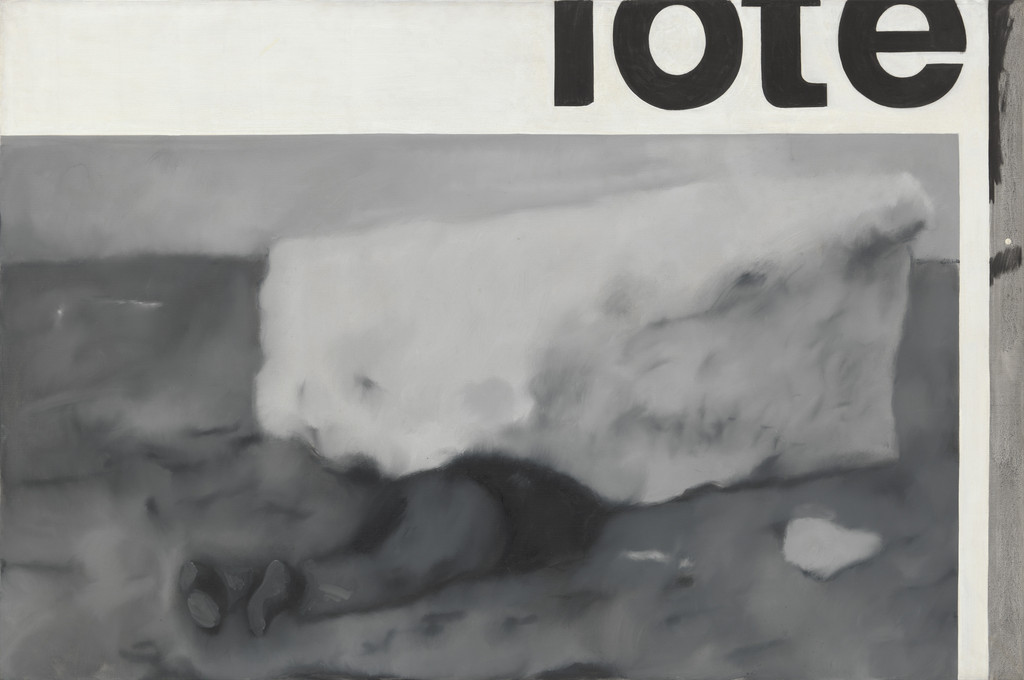
Dead
Será possível contemplá-la?
Sim, recebe visitas

Museu de Arte Moderna
SalaMoMA, Floor 4, 420Nova Iorque, Estados Unidos
Exposta ao público. Quem o garante vem indicado abaixo.
- Verificado
- há 10 dias
- Fonte
- Os dados da própria coleção do museu
Pormenores
- Número de inventário
- 741.2013
Fontes
- Museu de Arte Moderna: the museum's own open data · obtido há 10 dias
- Imagem: Museu de Arte Moderna — © the artist or rights holder
Entretanto, na vida de Gerhard Richter
A vida inteira1957–1961
Master trainee at the Academy and East German commissions
From 1957 to 1961 Richter works as a master trainee at the Academy and takes commissions for the then East German state: murals such as “Workers’ Struggle” (Arbeiterkampf), portraits of the actress Angelica Domröse and of his first wife, self-portraits, and a panorama of Dresden, “Townscape” (Stadtbild, 1956).
1961
Fleeing East Germany two months before the Berlin Wall
In 1961 Richter and his wife Marianne escape from East to West Germany, two months before the Berlin Wall is built. Both his wall paintings, at the Academy and at the Hygiene Museum, were then painted over for ideological reasons.
after 1961
“Capitalist Realism” in a furniture store
After moving to West Germany Richter works with Sigmar Polke and Konrad Fischer-Lueg, playing in a pop-art spirit with advertisements and road signs; they mockingly call the result “capitalist realism”. The two-week exhibition is held in Berges’s furniture store in Düsseldorf.
after 1961
Düsseldorf: under Götz, alongside Polke and Lueg
In West Germany Richter begins to study at the Kunstakademie Düsseldorf under Karl Otto Götz, together with Sigmar Polke, Werner Hilsing, HA Schult, Kuno Gonschior, Franz Erhard Walther, Konrad Lueg and Gotthard Graubner.
1963–1964
The first shows: Düsseldorf and Galerie Schmela
Richter first exhibits in Düsseldorf in 1963, and in 1964 has his first gallery solo show at Galerie Schmela in the same city. Exhibitions in Munich and Berlin soon follow, and by the early 1970s he shows frequently throughout Europe and the United States.

![Townscape (P1) [Stadtbild (P1)], Gerhard Richter, 1968](/api/img?u=https%3A%2F%2Fwww.artic.edu%2Fiiif%2F2%2Ff69c0687-7233-f1ad-d340-3e8c26334304%2Ffull%2F1200%2C%2F0%2Fdefault.jpg)


![Venice (Staircase) [Venedig (Treppe)], Gerhard Richter, 1985](/api/img?u=https%3A%2F%2Fwww.artic.edu%2Fiiif%2F2%2F2fc6cbcb-3c5f-c1c3-47c2-d0ccb9914058%2Ffull%2F1200%2C%2F0%2Fdefault.jpg)