Paul KleeAlemanha, 1879–1940
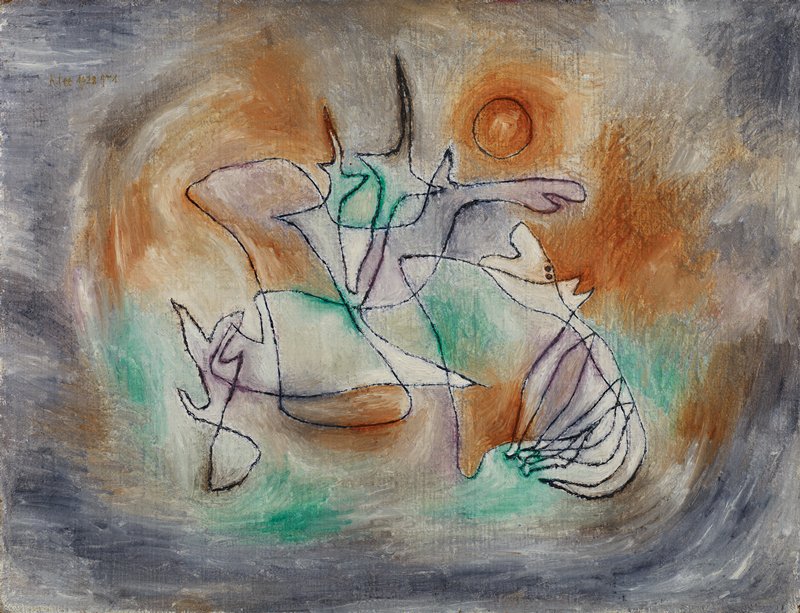
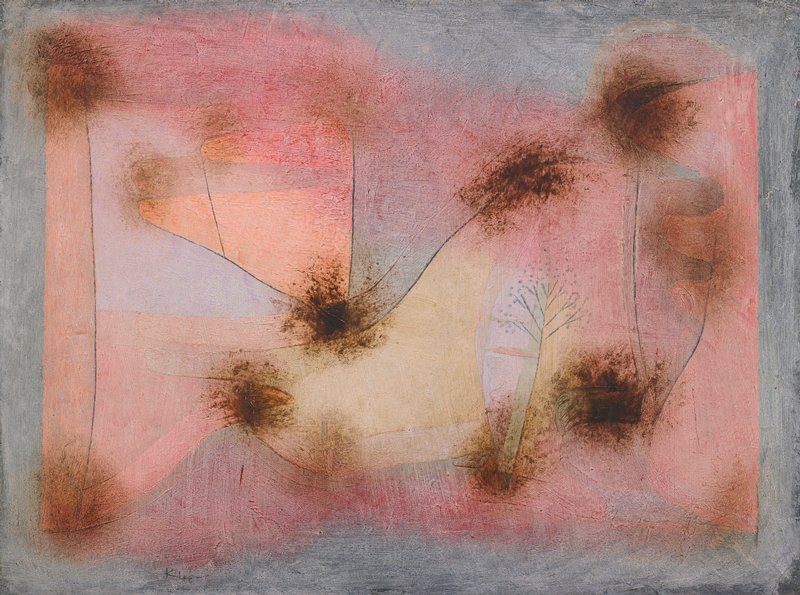
Insects
Será possível contemplá-la?
De momento, não recebe

Art Institute of Chicago
Chicago, Estados Unidos
Pertence à coleção, mas de momento não está exposta.
- Verificado
- há 3 dias
- Neste estado desde
- 19 de ago. de 2026
- Fonte
- Os dados da própria coleção do museu
Pormenores
- Número de inventário
- 1970.264
No catálogo
Fontes
- Art Institute of Chicago: the museum's own open data · obtido há 3 dias
- Imagem: Art Institute of Chicago — © the artist or rights holder
Entretanto, na vida de Paul Klee
A vida inteiraFebruary 1917
Second show at Walden’s: the first commercial success
Klee showed the watercolours of the past year; many works were sold, and critics called him the most important German artist since Marc’s death. The success was made possible by a changed market: collectors had appeared who were ready to buy modern art.
1918–1919
After the revolution: demobilisation and an artists’ committee
After the November Revolution Klee petitioned the new authorities to release him from service and was demobilised. In spring 1919 he was invited onto the Executive Committee of Revolutionary Artists, but the republic fell before he could begin.
1919
A rejected candidacy for the Stuttgart Academy
Oskar Schlemmer and Willi Baumeister put Klee forward, unsuccessfully, for a teaching post at the Stuttgart Academy of Fine Arts. Some of those who opposed the appointment hinted at the artist’s Jewish origin.
1920
Retrospective at Goltz’s: over 300 works
In 1920 Hans Goltz showed Klee’s works at his Munich gallery — a retrospective of more than 300 works.
October 1920
Gropius invites Klee to teach at the Bauhaus
In October 1920, on behalf of the Bauhaus staff, its director Walter Gropius invited Klee to teach; from January 1921 to April 1931 he was a “form master” — first in the bookbinding workshop, then, together with Kandinsky, in the stained-glass and mural-painting workshops, and later he ran a painting class.
1921–1931
The preliminary course on the “theory of form”
Klee developed a preliminary course in the “theory of form” that began with the “point as the beginning of all beginnings”, moving through space, and the “cosmic egg” from which line, spiral, square, circle and cube are born. Students listened to lectures illustrated with Klee’s own abstract watercolours and then painted their own, trying to express movement, balance, flight and tension.