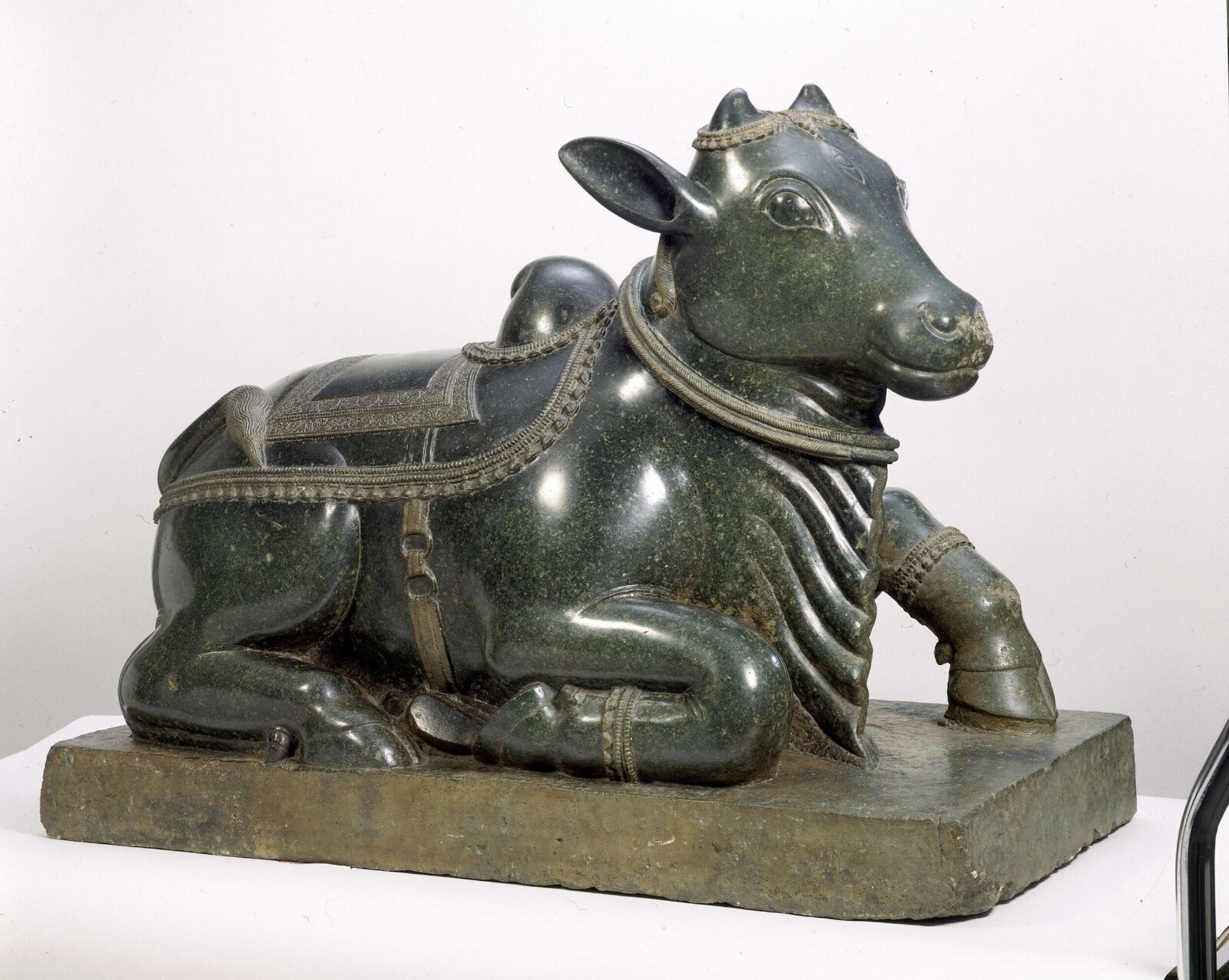
Nandi
Será possível contemplá-la?
De momento, não recebe

Museu Vitória e Alberto
Londres, Reino Unido
Pertence à coleção, mas de momento não está exposta.
- Verificado
- há 7 dias
- Neste estado desde
- 25 de set. de 2026
- Fonte
- Os dados da própria coleção do museu
About the sculpture
This is an image of Nandi, the sacred bull-calf. In Sanskrit Nandi means ‘joyfulness’ or ‘blissfulness’ and refers to the emotions experienced by a devotee in the presence of Lord Shiva.
Temples dedicated to Shiva, the Hindu lord of creation and destruction, are found throughout the Indian subcontinent. An essential element in any Shiva temple is the image of Nandi. It occupies an axial position, focusing the attention of the faithful from the outer halls of the temple directly into its spiritual heart, the ‘garbhagrha’ (‘womb chamber’).
Images of this scale and larger were usually housed in a pillared hall (‘mandapa’). This building stood independent of the temple but allowed Nandi to face directly into the eastern porch to the linga (phallic symbol of Shiva) sanctuary. This made explicit Nandi's intimate relationship with Shiva.
Read on
Nandi symbolises the religious duty (‘dharma’) of a devotee. As Shiva’s ultimate devotee, Nandi is in turn first worshipped by those intending to pay homage to Shiva himself in the temple sanctuary. He is represented as a bull-calf and always couchant. Nandi in the form of a processional vehicle (‘vahana’) is represented standing. Processional Nandis are typically constructed of wood which is then either painted or covered in sheet silver, depending on the wealth of the temple.
Museu Vitória e Alberto
Pormenores
- Número de inventário
- IS.73-1990
What it shows
No catálogo
Fontes
- Museu Vitória e Alberto: the museum's own open data · obtido há 7 dias
- Imagem: Museu Vitória e Alberto — © Victoria and Albert Museum, London