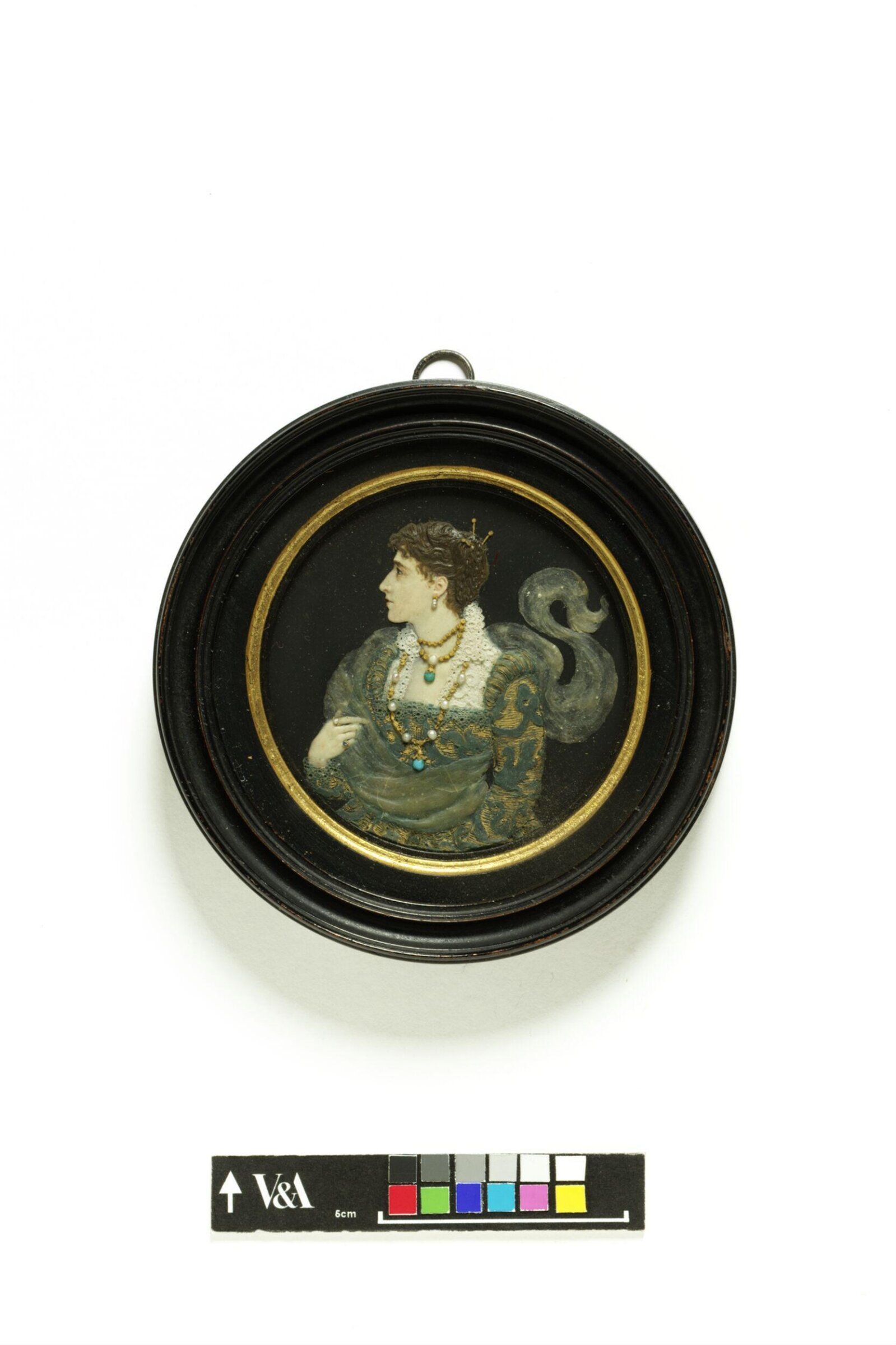
Ella Casella
Relief
Será possível contemplá-la?
De momento, não recebe

Museu Vitória e Alberto
Londres, Reino Unido
Pertence à coleção, mas de momento não está exposta.
- Verificado
- há 7 dias
- Neste estado desde
- 25 de set. de 2026
- Fonte
- Os dados da própria coleção do museu
About the sculpture
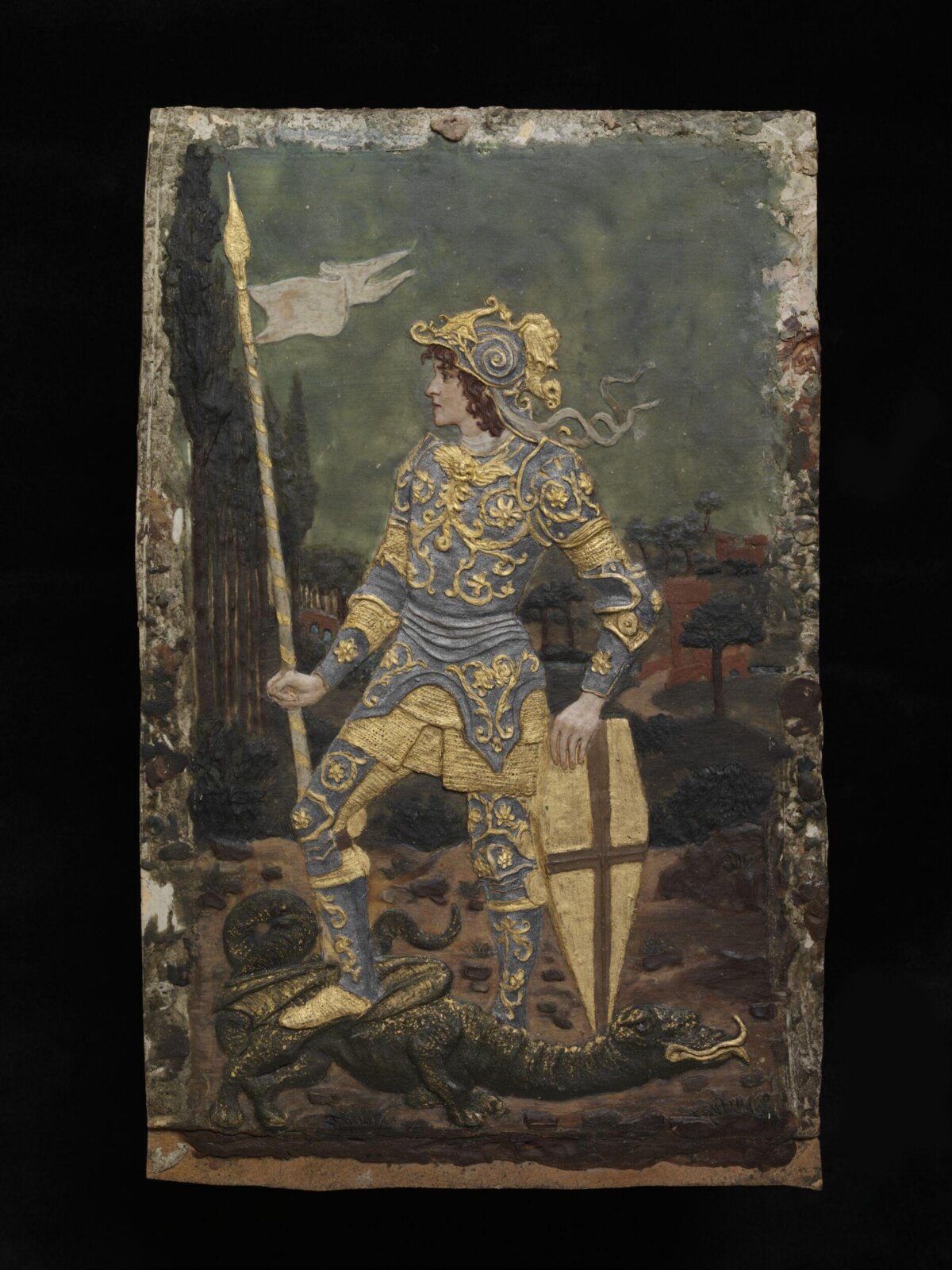
A bas-relief of coloured wax, with the subject of St. george and the dragon. The saint is represented standing in a wooded landscape, with one foot on the ground and the other on the prostrate monster, while he leans on his shield, holding his lance firmly with his right hand. He is clothed in complete armour which is richly decorated with gilt ornament and his helmet is surmounted by a dragon. In the background is a fortified bridge over a river, and a castle is visible in the far distance.
Read on
Wax is an organic substance derived from animals and plants, an inexpensive and versatile material that has long been used by artists for sketch models and small sculptures. It is quick and easy to shape, yet also inexpensive. Once softened, it is modelled in a similar way to clay, with the composition built up gradually. To enhance the wax, pigment can be added before moulding and pearls or other jewels can be embedded in the surface afterwards. Wax was thought to be particularly well-suited to women since more traditional methods and materials such as wood or stone carving were considered to be messy, dangerous and unsuitable for ladies.
Ella Casella (1858-1946) and her sister Nelia Casella (1859-1950)were artists who worked collaboratively in a variety of media: wax, watercolour, glass enamelling, leather tooling and metalworking. In the 1880s, they studied under Alphonse Legros (1837-1911) at the Slade School of Art and exhibited both at the Royal Academy and with the Arts and Crafts Exhibition Society in the 1890s. As part of the revival of Renaissance art by British artists in this period, the Casella sisters drew from a Renaissance tradition, in form and method, aligning themselves with great masters such as Pisanello (1395-1455). This panel was exhibited by Ella Casella in the Woman's Work Section of the Victorian Era Exhibition in London in 1897.
Actively involved in the thriving artistic and cultural life of turn of the century London, these artists’ were inspired by theatrical costuming of the period and many of their wax relief portraits represent friends from their circle, including many celebrities of the day such as Ellen Terry, Henry Irving, Franz Liszt and Bram Stoker. As well-educated ladies of wealth and distinction, both their gender and social standing played a predictably pivotal role in the development of their art, training, and working practice.
Museu Vitória e Alberto
Pormenores
- Número de inventário
- 1005-1897
What it shows
No catálogo
Fontes
- Museu Vitória e Alberto: the museum's own open data · obtido há 7 dias
- Imagem: Museu Vitória e Alberto — © Victoria and Albert Museum, London