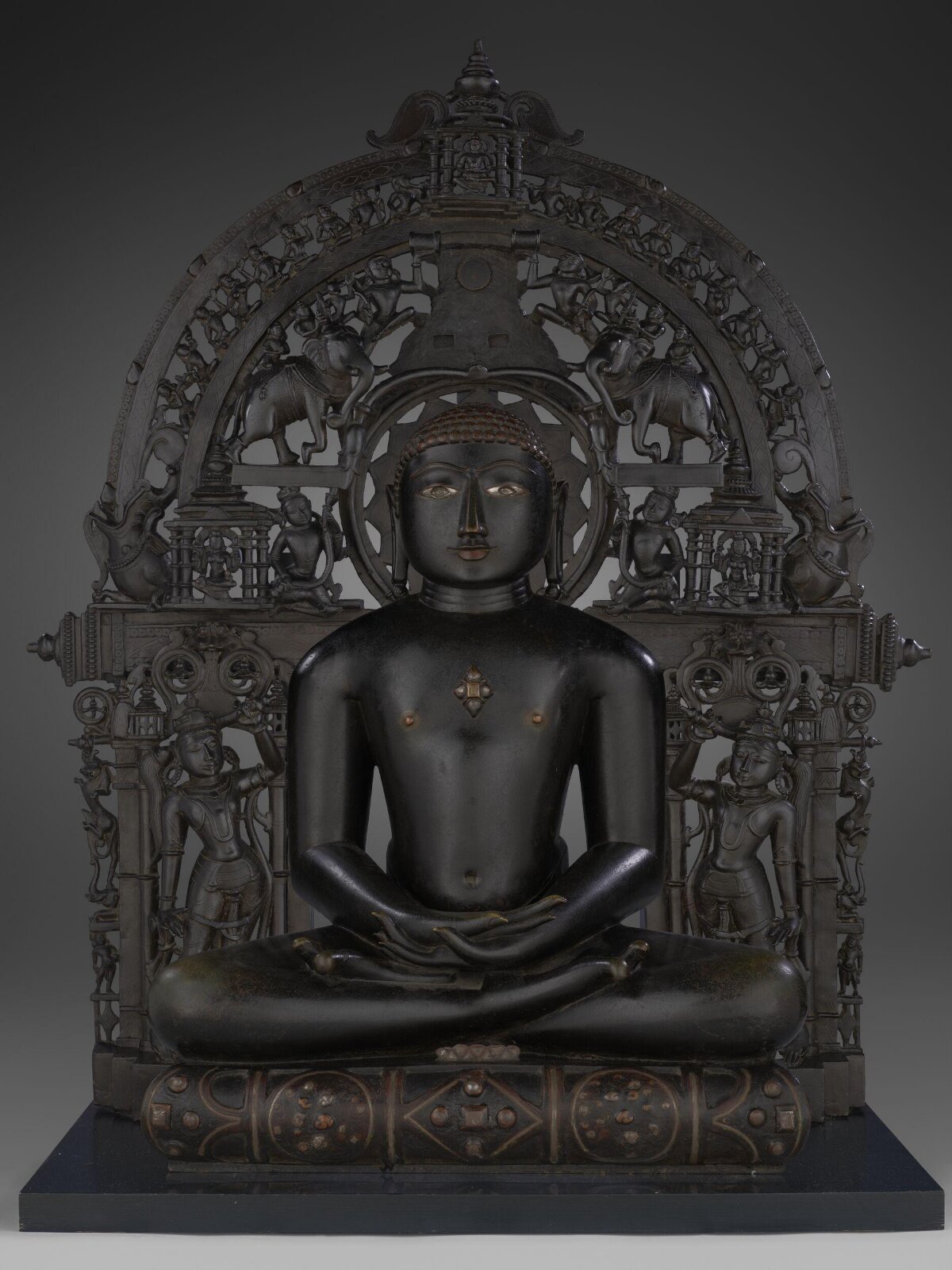
Santinatha
Será possível contemplá-la?
Sim, recebe visitas

Museu Vitória e Alberto
SalaSouth-East Asia, Room 47cLondres, Reino Unido
Exposta ao público. Quem o garante vem indicado abaixo.
- Verificado
- há 7 dias
- Neste estado desde
- 25 de set. de 2026
- Fonte
- Os dados da própria coleção do museu
About the sculpture
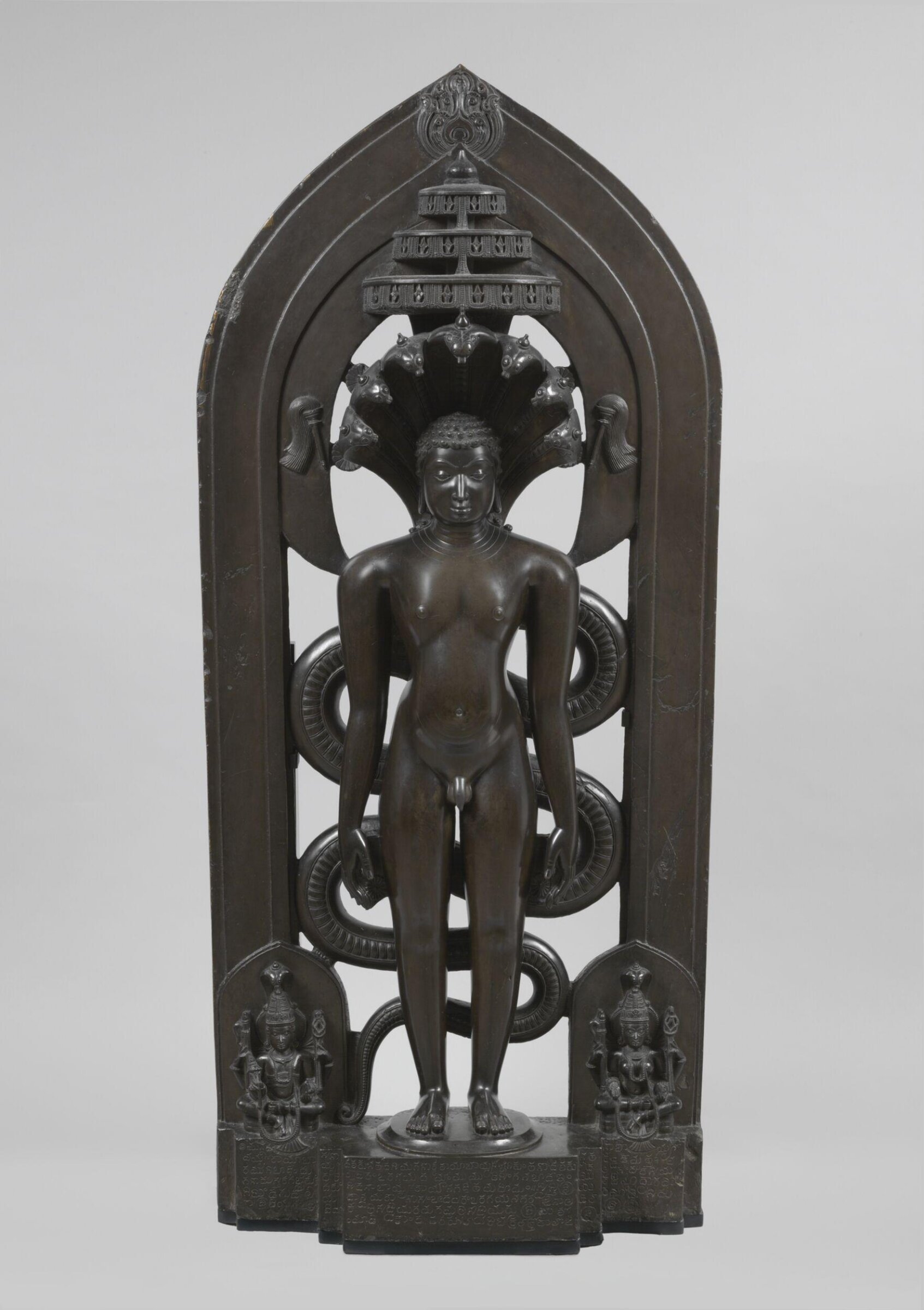
Shantinath is especially revered in the Jain pantheon. He is the 16th Jina (saviour-teacher) and is said to have revived Jainism at a time when it was in danger of extinction, assuring the faith's survival. Over time Jains came to invoke him to avert calamities and ensure the peace his name suggests (santi, ‘peace’; natha,‘lord’).
This image is one of the finest 12th-century western Indian Jain monumental bronze castings recorded. The figure bears an inscription dedicating it to the triumph of Sri Shantinatha in the year of Vikrama-Sanwat 1224 (1168 AD).
The naked meditating Jina is seated in the ‘padmasana’ posture on a jewelled cushion. This is richly decorated with silver and copper inlay and deer motifs. The deer which appears on the throne-base is the attribute (symbol) associated with Shantinatha.
Read on
The figure is beautifully modelled, with finely articulated hands and feet. The symmetrical curls of hair frame a face of serene calm. The prominent ‘srivatsa’ mark on the chest is inlaid with silver and copper. The eyes are silver and were probably once set with precious stones or crystal, now missing. The highly elaborate back plate is cast in three sections and provides the ‘prabhavati’ (radiating halo). It also supports the fly-whisk bearers and celestial attendants, elephants and musicians who pay homage to the Jina.
Museu Vitória e Alberto
Pormenores
- Número de inventário
- 930(IS)
What it shows
No catálogo
Fontes
- Museu Vitória e Alberto: the museum's own open data · obtido há 7 dias
- Imagem: Museu Vitória e Alberto — © Victoria and Albert Museum, London