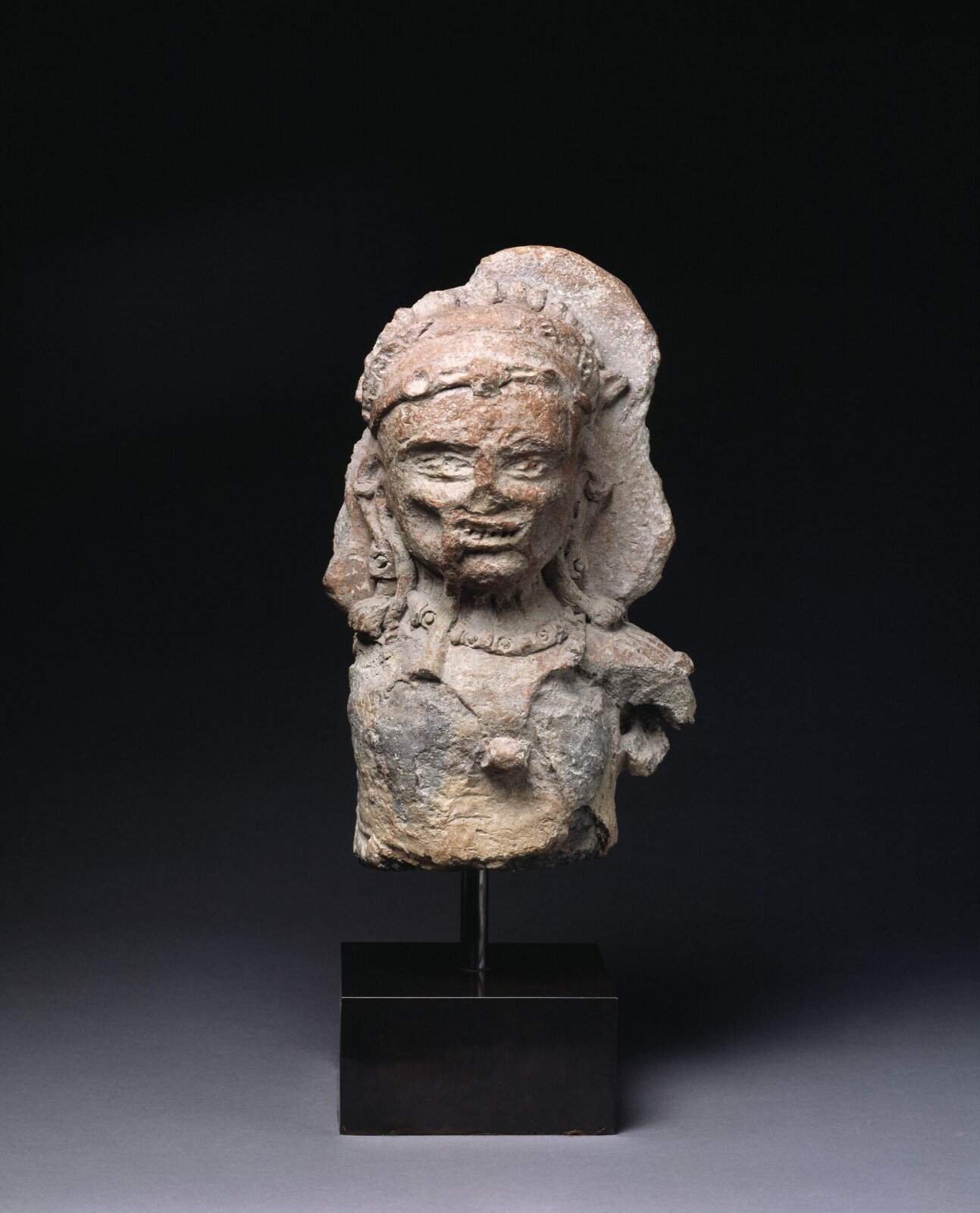
Camunda
可否一睹真容?
眼下不见客

维多利亚和阿尔伯特博物馆
倫敦, 英国
仍属馆藏,只是目前没有展出。
- 核实
- 7天前
- 此状态始于
- 2026年9月25日
- 出处
- 博物馆自己的馆藏数据
About the sculpture
The goddess Camunda epitomises all that is terrific and horrifying in the Hindu vision. She is the terrifying aspect of the female element and is independently represented as an aspect of the supreme female deity Durga, and as one of the seven mothers (saptamatrikas) where she is seen as the consort of Siva in his wild ascetic form of Bhairava. Camunda is represented as an emaciated old woman of dark complexion, her skeletal figure adorned with garlands of skulls and snakes, laughing hideously. In this terracotta Chamunda has a terrifying countenance, capturing remarkably the savage mood of her destructive nature. Much detail is lost from this figure, including the ‘signature’ scorpion that usually adorns her breast.
Read on
Camunda became an important figure in the sakta cults in which female aspects of deities became the focus of worship in their own right. The worship of Camunda appears to have become prominent by the late Gupta period and it is to this era that this terracotta may be attributed. Terracotta was a favoured material for temple relief decoration, usually placed on the external walls of the sanctuary. Camunda had a secure place alongside Durga, of whom she is a manifestation, as seen in the rock-cut terraces at the 8th century Kailasa temple at Ellora.
维多利亚和阿尔伯特博物馆
作品信息
- 馆藏编号
- IS.68-1986
What it shows
已收入目录
出处
- 维多利亚和阿尔伯特博物馆: the museum's own open data · 7天前获取
- 图片: 维多利亚和阿尔伯特博物馆 — © Victoria and Albert Museum, London