Ganesha
可否一睹真容?
眼下不见客

维多利亚和阿尔伯特博物馆
倫敦, 英国
仍属馆藏,只是目前没有展出。
- 核实
- 7天前
- 此状态始于
- 2026年9月25日
- 出处
- 博物馆自己的馆藏数据
About the sculpture
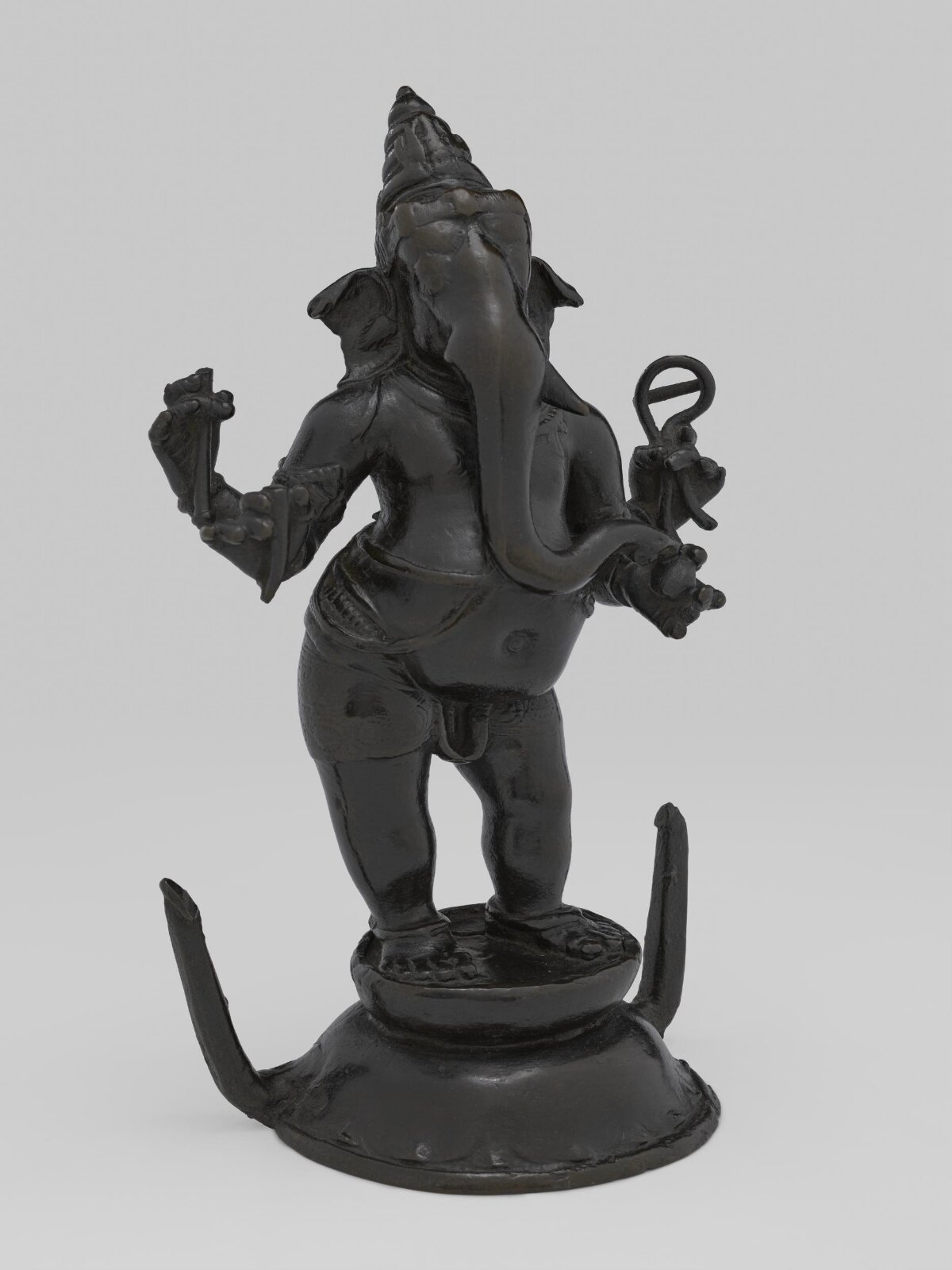
Ganesha is the elephant-headed son of Shiva and Parvati. He is represented here in a processional form that would accompany his parents during temple parades, although he would be carried on a separate palanquin.
Read on
Here Ganesha stands in a relaxed posture with his hip flexed. In this four-armed form, he holds in his upper hands a noose (pasa) and elephant-goad (ankusa). While in his lower left hand he displays one of the delicacies that he enjoys, variously identified as wood-apple (kapittha) or sweetmeats, which he is about to take with his trunk. The fourth hand holds his broken tusk. The reason Ganesha has a broken tusk is explained in a variety of anecdotal stories, but its origins may lie in its resemblance to the plough, as this evokes his early role as a patron of agrarian activity. This role appears to have been displaced in the later medieval period by other functions, notably to serve as the patron and protector of those embarking on new ventures.
This sculpture is a good example of the masterful casting techniques of the Chola period (850-1267 A.D.). It demonstrates the metalworkers’ use of subtle form, simple ornament and restrained surface decoration, along with minimal chased detail.
Ganesha stands on a circular lotus-pedestal that has upright projections which could support an arched surround.
维多利亚和阿尔伯特博物馆
作品信息
- 馆藏编号
- IS.2-1951
What it shows
已收入目录
出处
- 维多利亚和阿尔伯特博物馆: the museum's own open data · 7天前获取
- 图片: 维多利亚和阿尔伯特博物馆 — © Victoria and Albert Museum, London