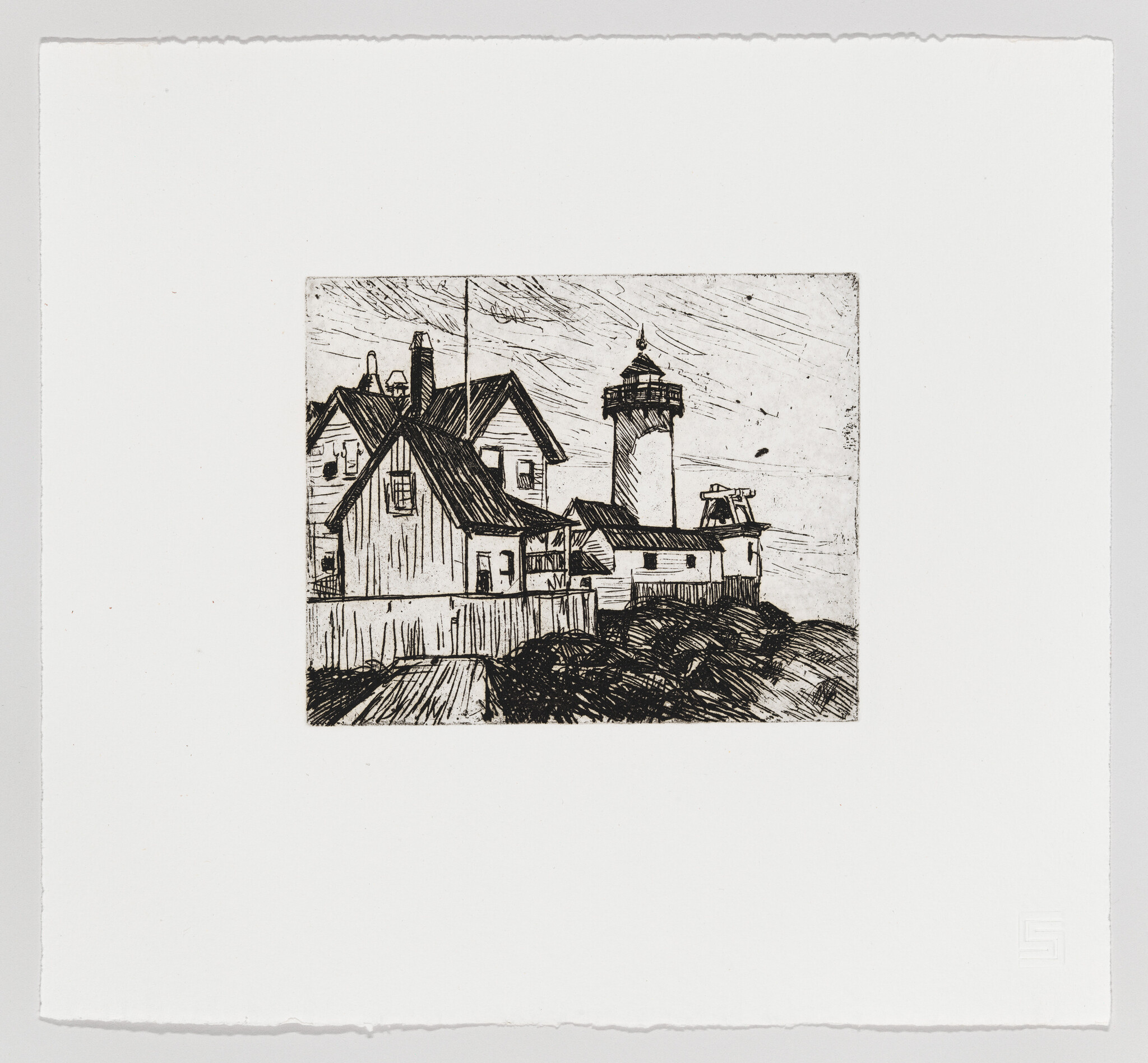
 Edward Hopper美国, 1882–1967
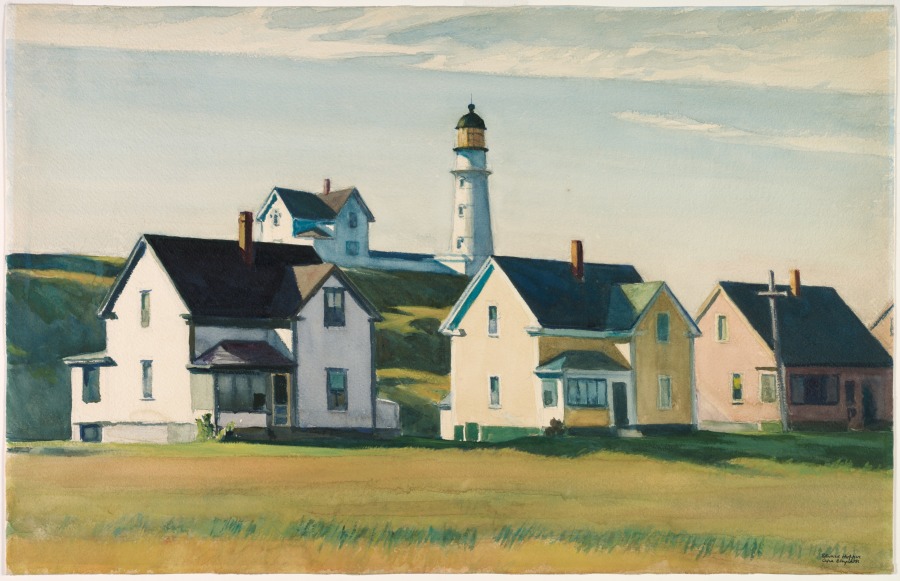
Lighthouse
可否一睹真容?
眼下不见客

惠特尼美国艺术博物馆
纽约, 美國
仍属馆藏,只是目前没有展出。
- 核实
- 7天前
- 出处
- 博物馆自己的馆藏数据
作品信息
- 馆藏编号
- 70.1900
出处
- 惠特尼美国艺术博物馆: the museum's own open data · 7天前获取
- 图片: 惠特尼美国艺术博物馆 — © the artist or rights holder
与此同时,在Edward Hopper的生活中
完整生平1913
His first sale: “Sailing” at the Armory Show
At the Armory Show in New York Hopper sells his first painting, “Sailing” (1911), painted over an earlier self-portrait, to the businessman Thomas F. Vietor for $250. The thirty-one-year-old hopes his first sale will lead to others in short order, but his career will not catch on for many more years.
1913
His father's death, and the move to 3 Washington Square North
In September 1913 his father, Garret Henry Hopper, a dry-goods merchant who had retired at forty-nine, dies; shortly afterwards Hopper moves to an apartment at 3 Washington Square North in Greenwich Village, Manhattan, where he will live for the rest of his life.
1915–1923
Turning to etching
At an impasse over his oil paintings, in 1915 Hopper turns to etching; by 1923 he has produced most of his approximately 70 etchings, many of them urban scenes of Paris and New York, as well as some posters for the war effort.
1916–1919
Monhegan Island: seascapes
Hopper paints the majority of his pure seascapes of rocks, sea and beach grass on Monhegan Island between 1916 and 1919, mostly in strong light and fair weather.
1918
The Shipping Board Prize for “Smash the Hun”
In 1918 Hopper is awarded the $300 U.S. Shipping Board Prize for his war poster “Smash the Hun”.
January 1920
A one-man show at the Whitney Studio Club
In January 1920 a one-man exhibition of Hopper's work is held at the Whitney Studio Club, the precursor to the Whitney Museum; earlier, in 1917, he took part in a show of the Society of Independent Artists, and in 1922 he exhibits again at the Whitney Studio Club.