Watercolour
可否一睹真容?
眼下不见客

维多利亚和阿尔伯特博物馆
倫敦, 英国
仍属馆藏,只是目前没有展出。
- 核实
- 7天前
- 此状态始于
- 2026年9月25日
- 出处
- 博物馆自己的馆藏数据
关于作品
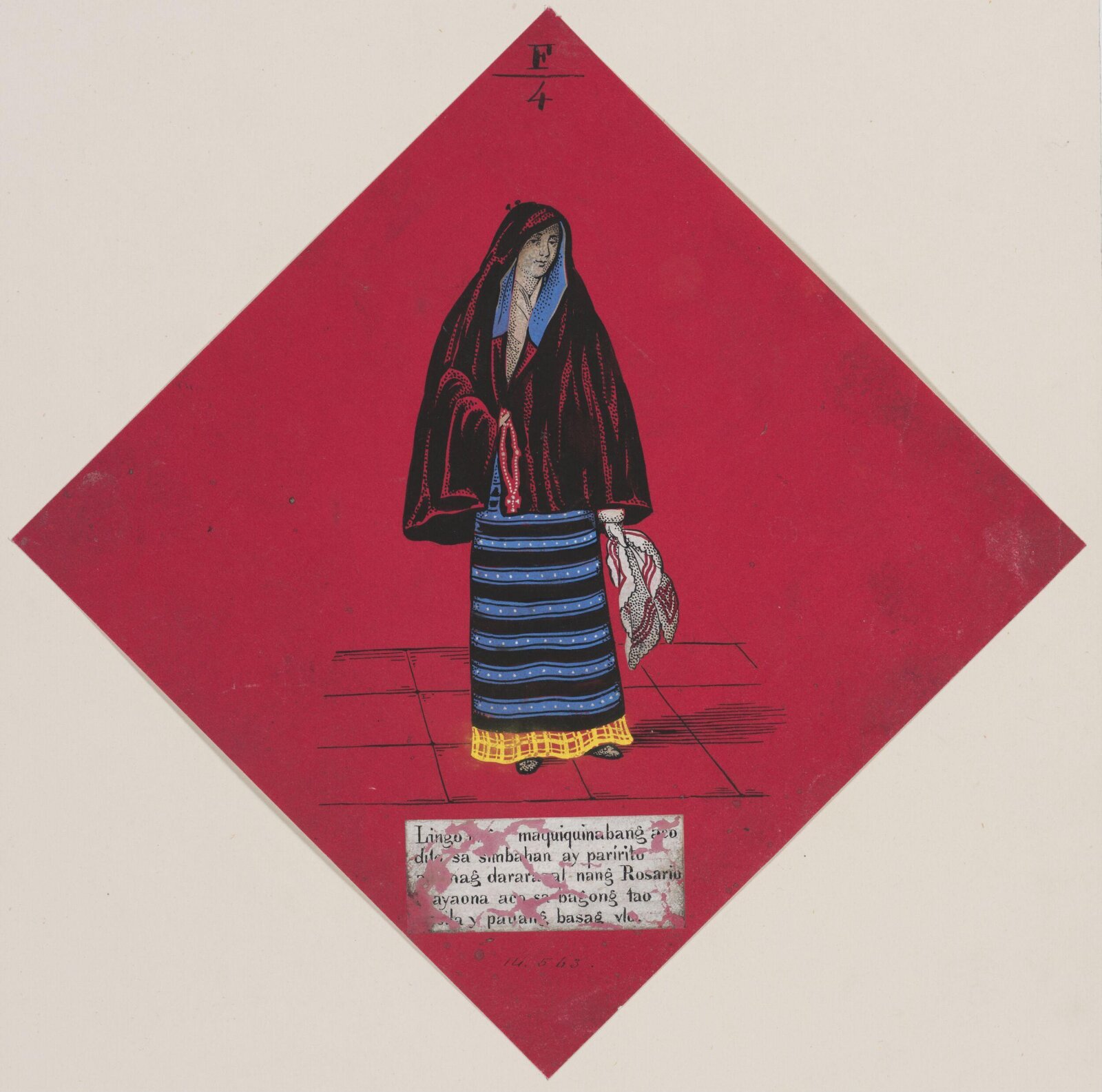
This watercolour, made by an unknown artist from the Philippines, is among the earliest objects to enter the V&A’s collection. One of eight by the same hand, the works directly correspond to another set (528 to 535), which were made at a similar time.
The artworks relate to a genre called tipos del país (‘types of the country’), popularised in nineteenth-century Manila. These small watercolours, depicting local people in ‘typical’ dress, were fashionable souvenirs for foreign traders in the latter part of the Spanish colonial period (1565–1898). Conventionally painted on white paper, this example reveals an unusual technique, with vivid colours on a prepared red ground.
Read on
Tipos del país were often lettered with titles that flattened subjects into reductive socio-ethnic categories. The Tagalog language captions here are untypical, offering a distinctive counterpoint. In lines of rhyming verse, they add a playful tone and more nuanced, often humorous, layer of personality. Some words are transliterated using Spanish spellings, which, along with the mixing of native and European fashions, exposes legacies of Empire in the form and fabric of these objects. The works evidence Manila as a cosmopolitan Southeast Asian capital – and a complex fusion of East and West – in the 1800s, as it is today.
维多利亚和阿尔伯特博物馆
作品信息
- 馆藏编号
- 14563
已收入目录
出处
- 维多利亚和阿尔伯特博物馆: the museum's own open data · 7天前获取
- 图片: 维多利亚和阿尔伯特博物馆 — © Victoria and Albert Museum, London