
French · 1859–1891
Georges Seurat
Painting rebuilt as a science of light — one dot at a time.
- 32
- works indexed
- 3
- on view now
- 3
- institutions
- 1
- country
Biography
Seurat treated color the way an engineer treats load: as something to be calculated. Drawing on optical theory, he replaced the Impressionists' spontaneous stroke with tiny points of pure pigment, mixed not on the palette but in the viewer's eye — a method he called divisionism and history calls pointillism.
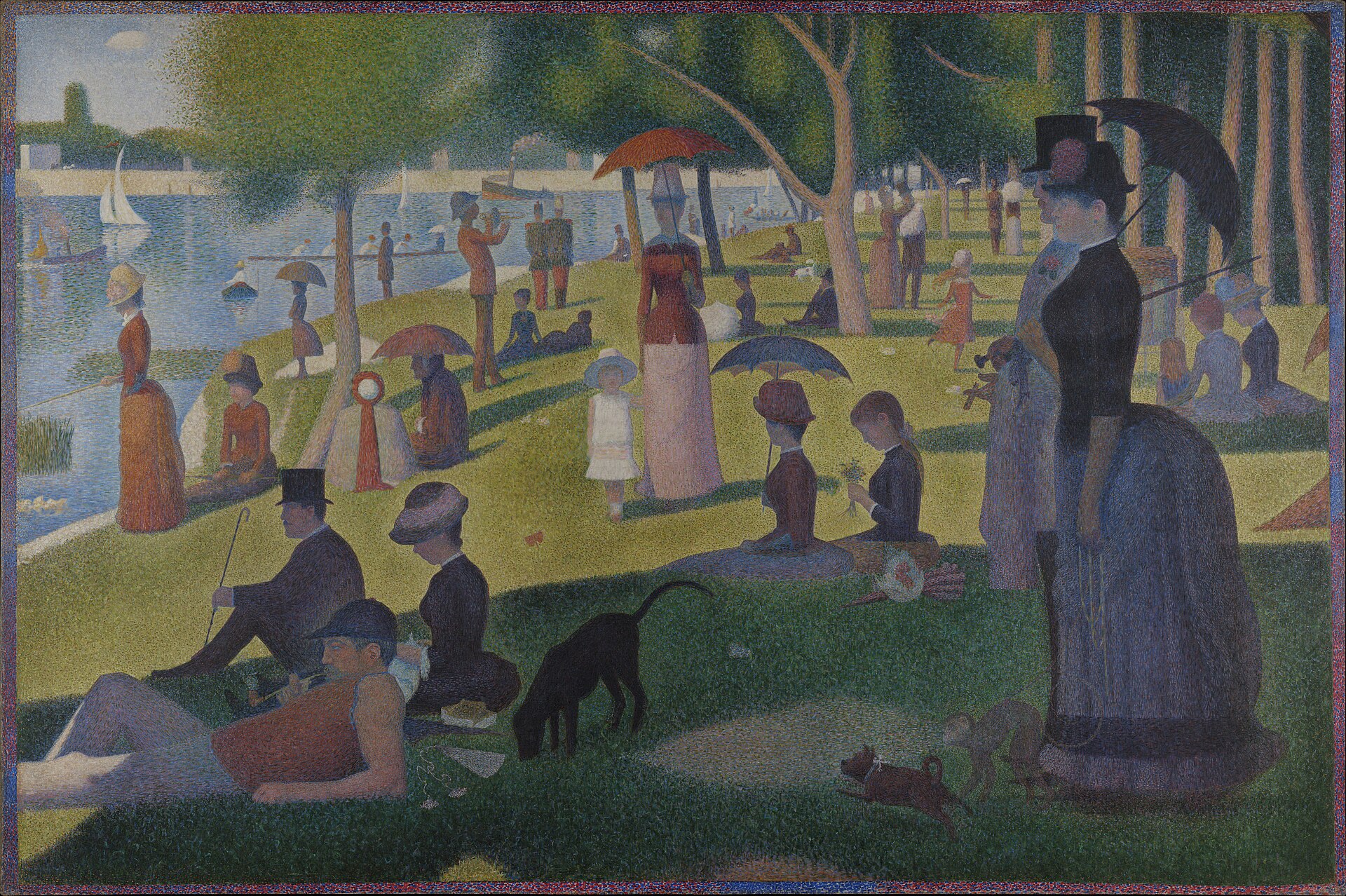
He completed only a handful of major canvases before dying at 31, but one of them — the mural-scale Sunday on La Grande Jatte, two years in the making — became the icon of an entire way of seeing: modern leisure frozen into classical stillness.
Identifiers
- Biography: ART MAP editorial. Works and display states: museum collection data.
A life in the collection
Milestones from the life, interleaved with dated works from the ART MAP graph.
1859
Born in Paris; trains at the École des Beaux-Arts

1877
Academic Male Nude
Art Institute of Chicago

1881/83
Roses in a Vase
Art Institute of Chicago

1882–83
The Zone (Outside the City Walls)
Art Institute of Chicago

1883
Final Study for "Bathers at Asnières"
On view · Art Institute of Chicago
1884
Bathers at Asnières rejected by the Salon; helps found the Indépendants
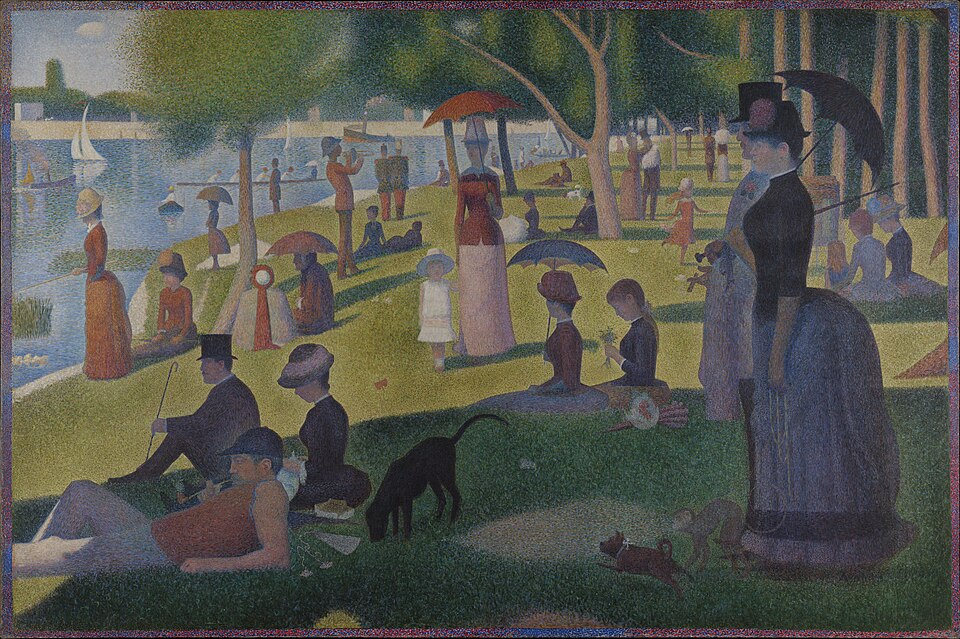
1884–86, border added 1888–89
A Sunday on La Grande Jatte — 1884
On view · Art Institute of Chicago
1886
La Grande Jatte unveiled at the final Impressionist exhibition

1886
The Lighthouse at Honfleur
National Gallery of Art
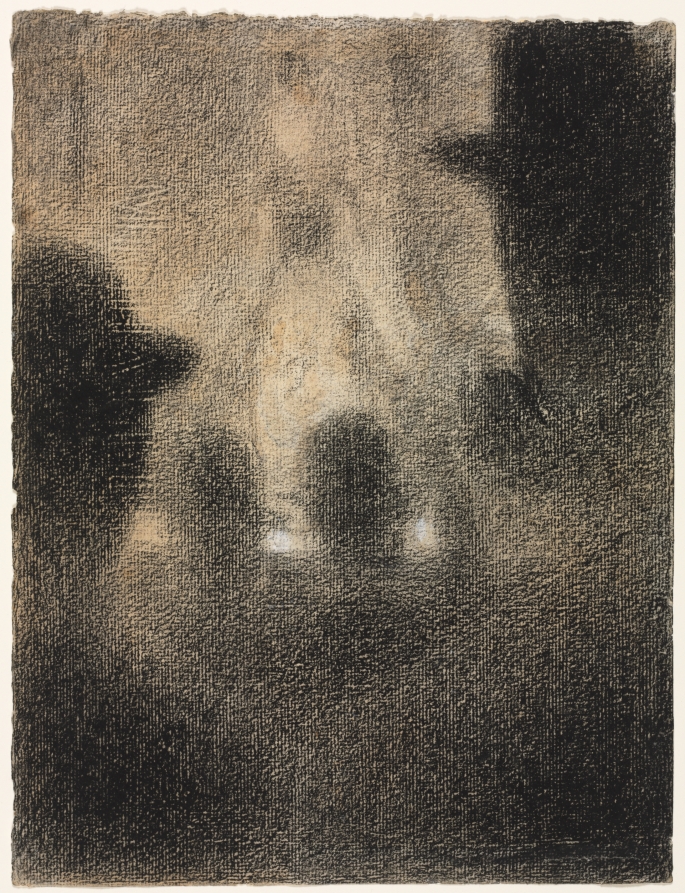
1887–88
At the Concert Parisien
The Cleveland Museum of Art

1888
Seascape at Port-en-Bessin, Normandy
National Gallery of Art

1890
Seascape (Gravelines)
National Gallery of Art
1891
Dies suddenly at 31, his last canvas unfinished