
French · 1848–1903
Paul Gauguin
The stockbroker who traded everything for color, myth and distance.
- 477
- works indexed
- 41
- on view now
- 4
- institutions
- 2
- countries
Biography
Gauguin came to painting as a Sunday amateur under Pissarro's wing and ended as the most radical colorist of his generation. Rejecting Impressionist observation for flat planes, heavy contours and invented hues, he sought subjects 'primitive' and sacred — first in Brittany, briefly and disastrously beside Van Gogh in Arles, then in Tahiti and the Marquesas.
His late Polynesian canvases — part observation, part colonial fantasy — became foundational for Fauvism and Expressionism, even as his own life story remains one of art history's most argued-over.
Identifiers
- Biography: ART MAP editorial. Works and display states: museum collection data.
A life in the collection
Milestones from the life, interleaved with dated works from the ART MAP graph.
1848
Born in Paris; childhood years in Lima, Peru
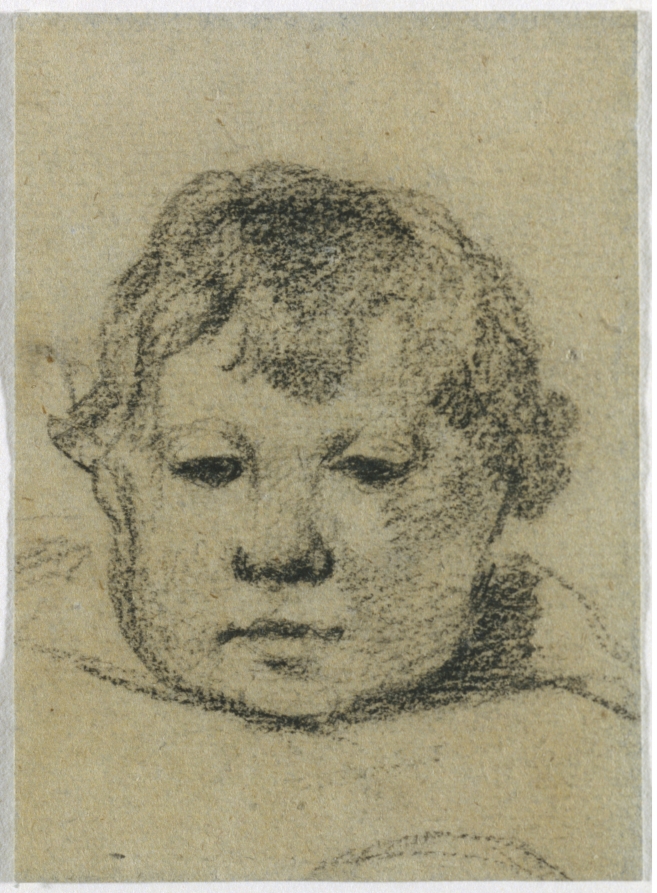
c. 1875–1876
Emil Gauguin as a Child
The Cleveland Museum of Art
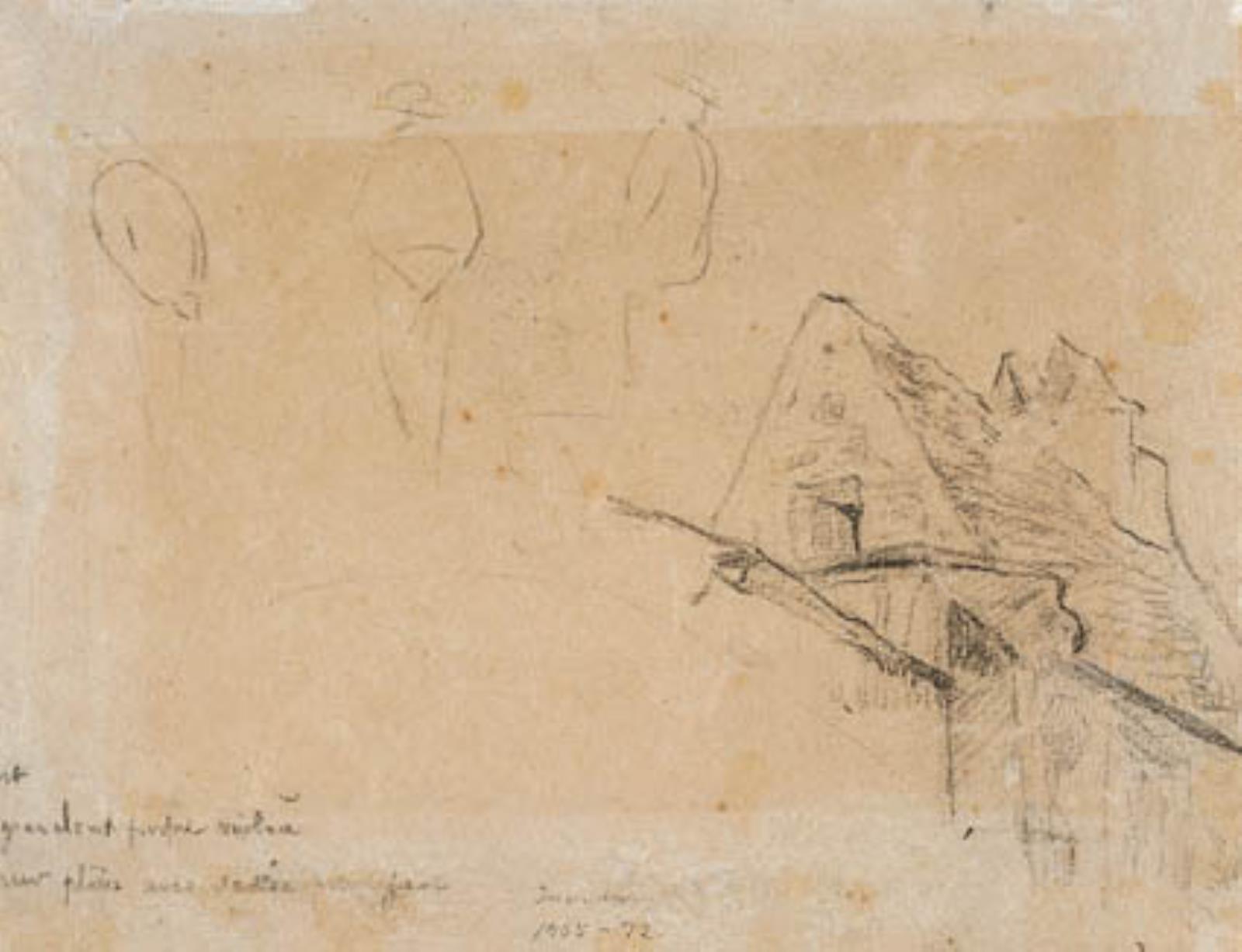
1879-1880
Tre skitser af stående mand set bagfra, og f.n. et hus med højt tag
SMK — National Gallery of Denmark
1883
Abandons the stock exchange for painting full-time
![Four Fantastic Forms [recto], Paul Gauguin, 1884-1888](https://api.nga.gov/iiif/82104b06-f51a-4f39-8c8b-91119b17d34c/full/!200,200/0/default.jpg)
1884-1888
Four Fantastic Forms [recto]
National Gallery of Art
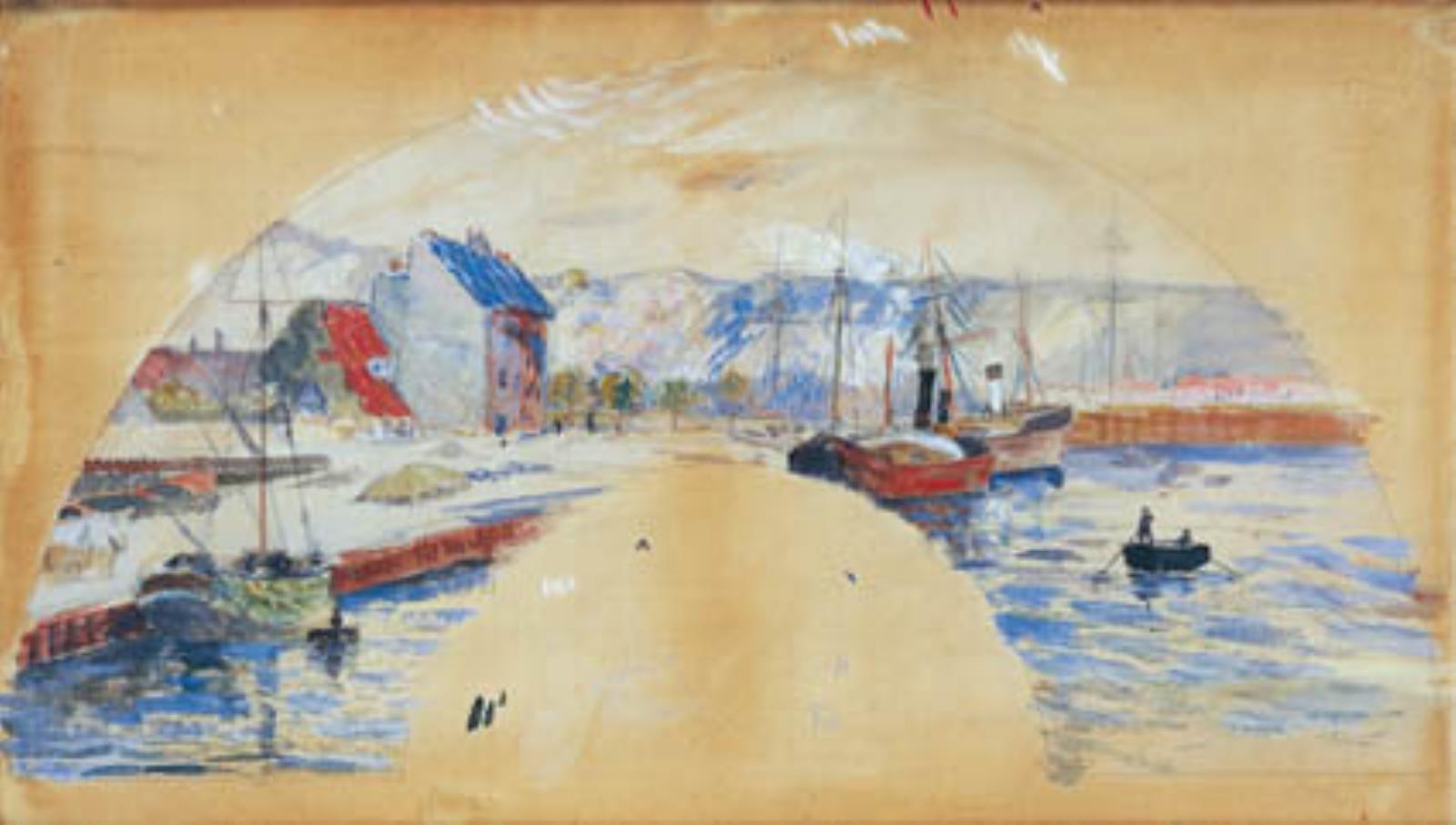
1885
Havneparti
SMK — National Gallery of Denmark
![Geese; Girls in Bonnets, Geese [recto], Paul Gauguin, 1886](https://api.nga.gov/iiif/380c0fe1-8a2f-4683-92eb-5993d24afd86/full/!200,200/0/default.jpg)
1886
Geese; Girls in Bonnets, Geese [recto]
National Gallery of Art

1887/1888
Madame Alexandre Kohler
On view · National Gallery of Art
1888
Vision after the Sermon in Brittany; the fraught weeks with Van Gogh in Arles
1888 or 1889
Self-Portrait Dedicated to Carrière
National Gallery of Art
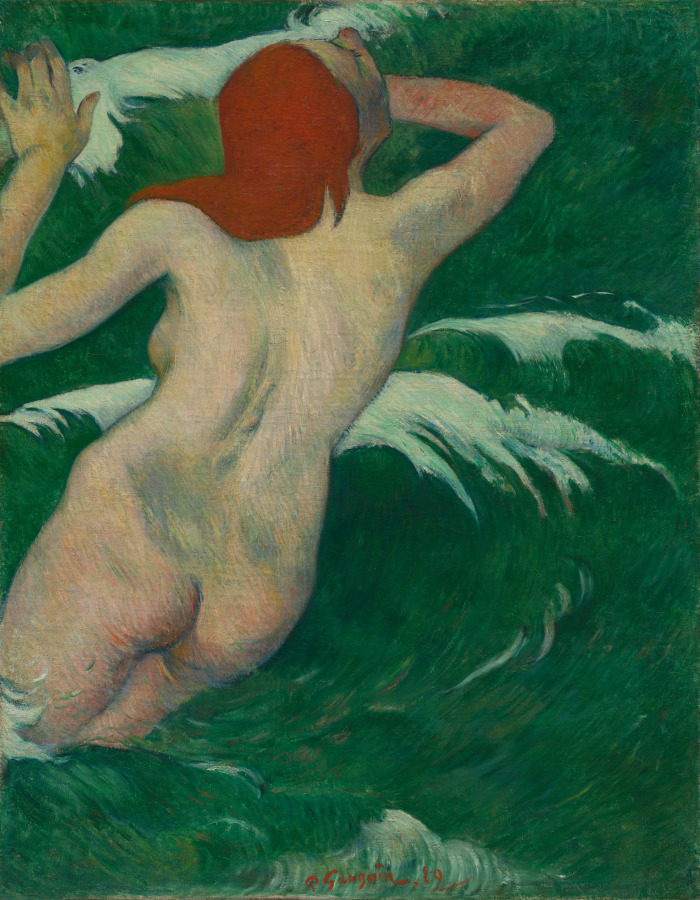
1889
In the Waves (Dans les Vagues)
On view · The Cleveland Museum of Art

c. 1890/1895
Parau No Te Varau Ino (left); Tahitian Legend (right)
National Gallery of Art
1891
First departure for Tahiti

1891
The Large Tree
The Cleveland Museum of Art
1903
Dies in the Marquesas Islands, aged 54